|
|
|
|
 |
|
| |
|
|
|
|
|
|
|
|
|
|
 |
| |
|
|
|
| |
Dear reader,
At the beginning of 2022, our new project appeared on your screens: The europeanimages photographic newsletter—a transregional collaboration between n-ost (DE), Pismo (PL), Athens Live (GR), and Kajet Journal (RO). If our thematic scope has been broad (ranging from Solidarity to Surveillance, from War to Women), our conceptual intentions have been clear: To shed some light on how contemporary images document, make sense of, and often instrumentalise the reality around us.
This is the last edition of 2022 and we could only end this series of newsletters by looking at Ukraine. Our initial idea was to avoid the war topic in this newsletter and highlight Ukraine and Ukrainian photography, showing the beauty and diversity of the country and its people. But the more we worked on the image selection, the more unrealistic this task became. Looking at pictures from Ukraine today, we already have a war lens. We share a beautiful Crimea landscape pointing to the annexation of 2014; show images of Ukrainian youths highlighting the displacement problem. Even the Ukrainian subways and archive pictures look different today. So let's face it and see the images. The war is still ongoing, although fewer images of it are being shared across social media. The crisis is deepening, although we are less and less in touch with the realities there. But just like death, life also carries on. It persists, it keeps going, it refuses to give in.
|
| |
|
|
|
|
| |
|
|
|
| |
| |
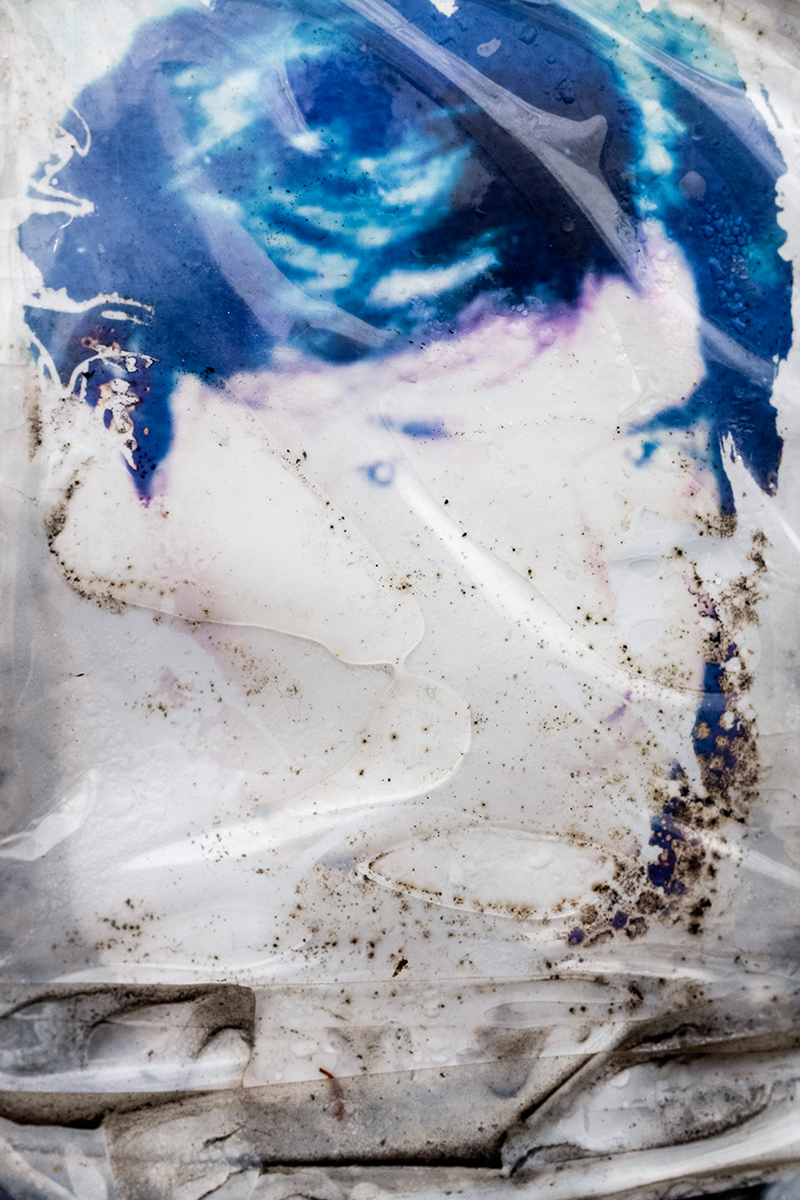
Top title image: A picture of a protester killed by police, photographed five years after the events on Maidan Square in 2014, where over 100 people were killed. Mykhaylo Palinchak from Kyiv, photographed for his work “Faces of Maidan”, a series of images on the trees left there by relatives and friends (2019).
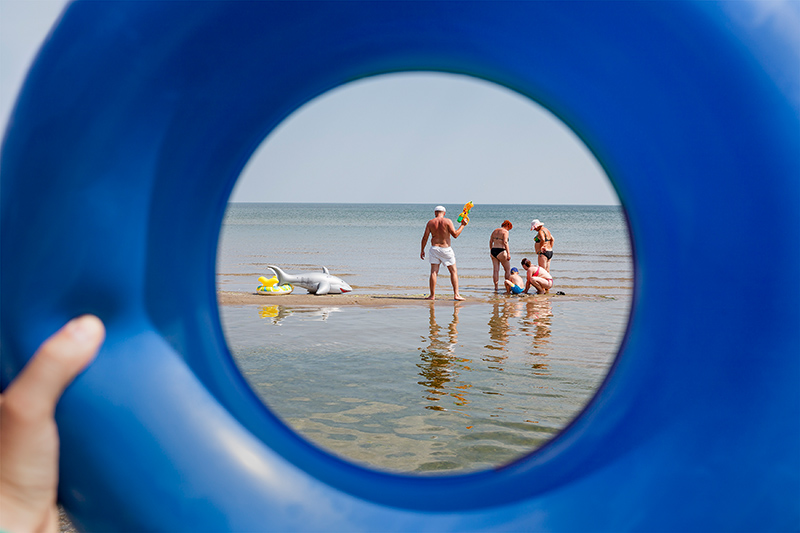
Bottom title image: Bathers at the Black Sea photographed through a blue swimming ring. The photographer believes these beaches are part of Ukraine's cultural landscape, and that you can learn more about Ukrainians here than in other public places. Kirill Golovchenko, born in Odesa and living in Mainz, for his work “Out of the Blue” (2016).
|
|
|
|
|
|
| |
|
|
|
|
|
| |
Seeing
UKRAINE
Single images by photographers
from all over Ukraine
|
|
| |
 |
|
| |
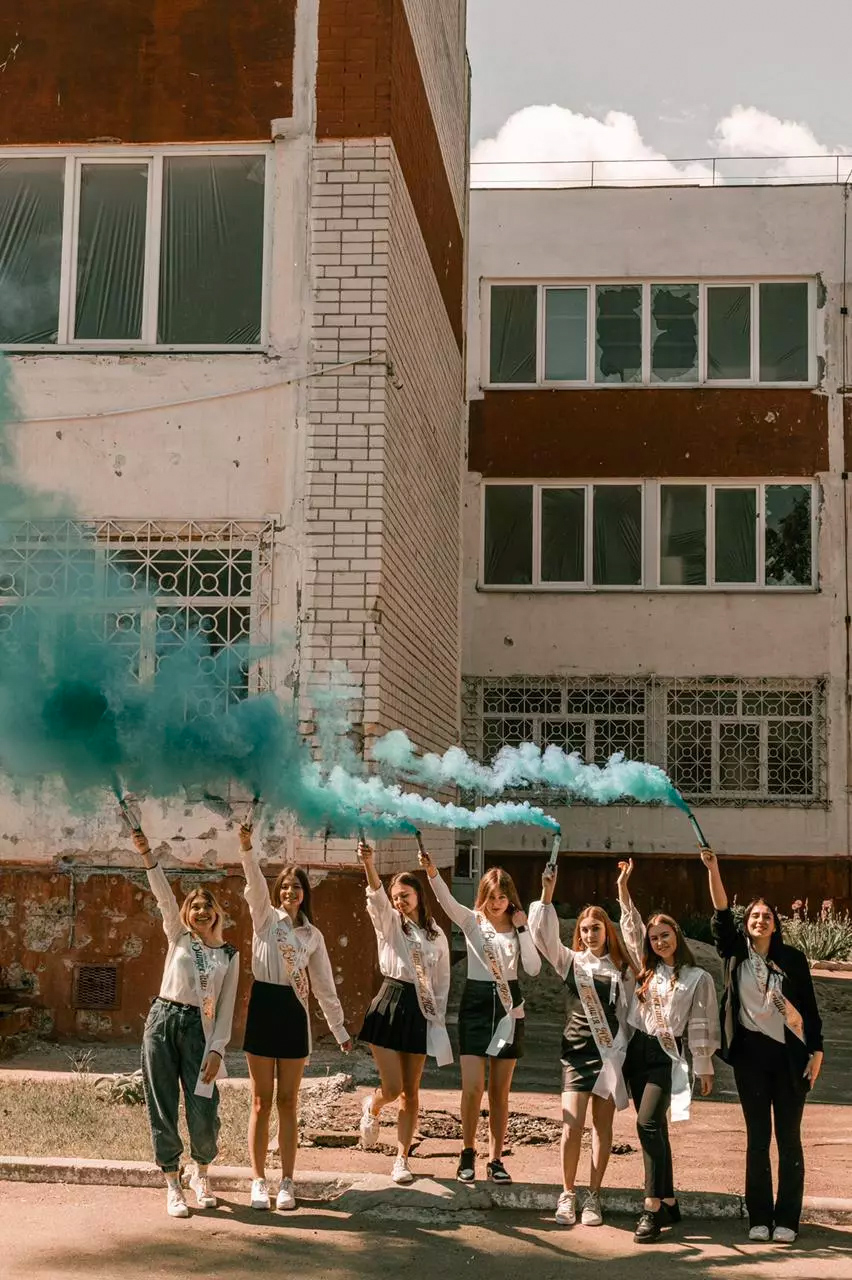
Young Ukrainian students posing in front of their damaged school 34 in the city of Chernihiv for a high school graduation photograph (2022). Stanislav Senyk, for his series portraying 40 graduating seniors from schools in bombed Chernihiv.
|
|
|
|
| |
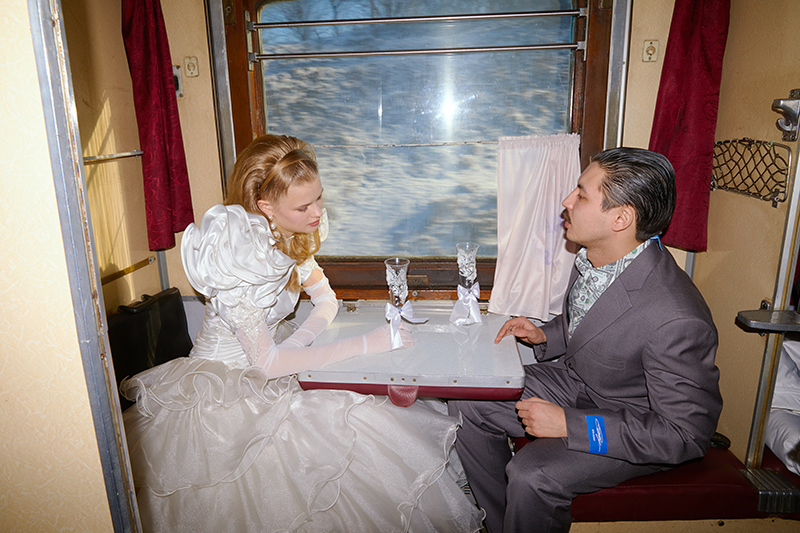
Staged picture on a Ukrainian train. The project depicts stereotypes of passengers and the personal experiences of photographer and author Julie Poly from Kyiv. (2017–2019).
|
|
|
|
|
|
|
| |
|
|
|
| |
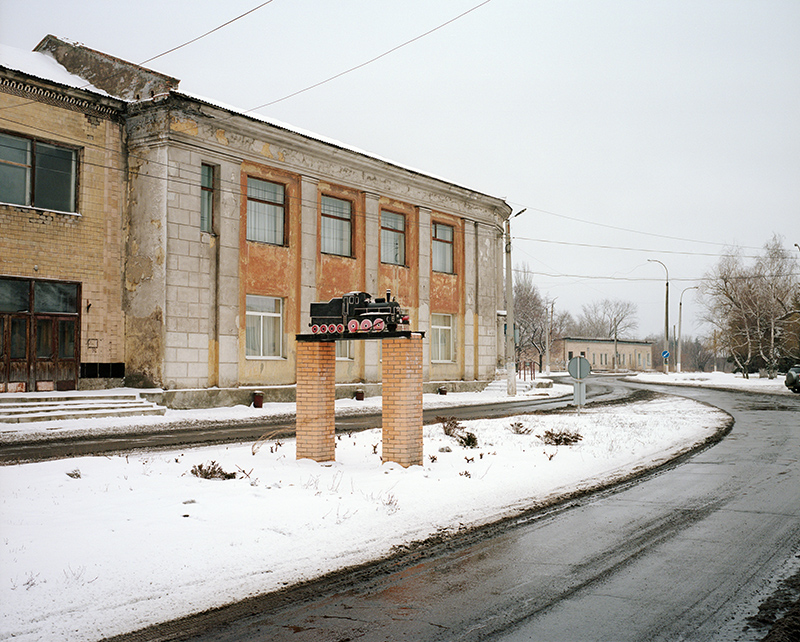
The former mining town Toretsk in the Donbas region, which has been near the front line since 2014. Lesha Berezovskiy from Kyiv, for his work on Toretsk for Republik.ch (February 2022).
|
|
|
|
|
|
|
| |
|
|
|
| |
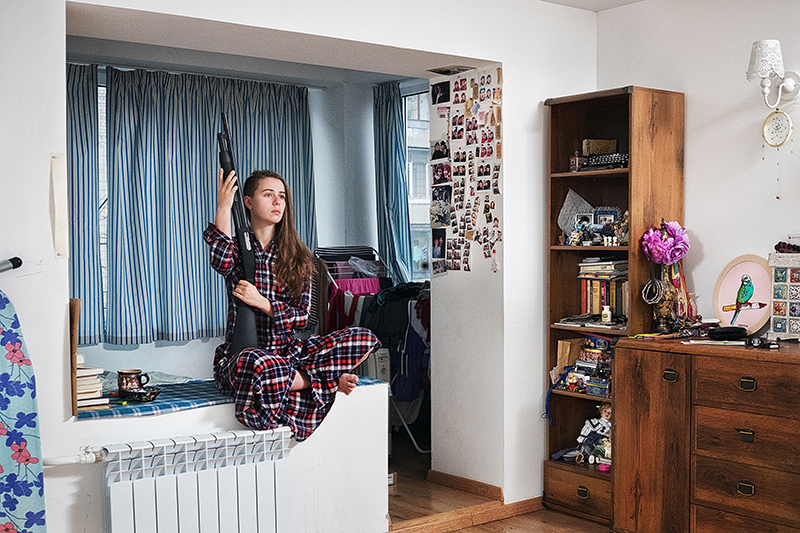
Anastasia, a 22-year-old combat lifesaver instructor, posing in her apartment with a shotgun she bought in 2015. Many people in Ukraine bought weapons after the war began in order to defend themselves. Andriy Lomakin from Kyiv, for his series “Amulet” (2015).
|
|
|
|
|
| |
|
|
|
| |
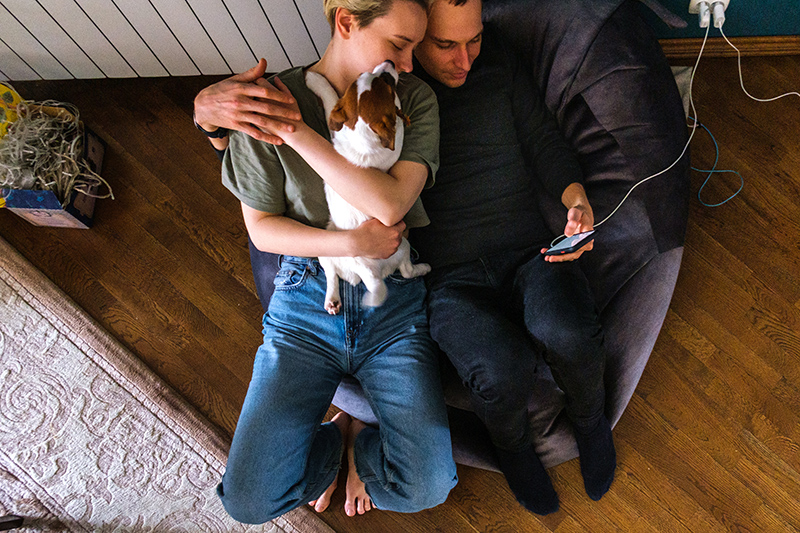
Elena and Sasha in their house not far from Lviv, where they live temporarily after leaving their homes in Kharkiv and Kyiv. Igor Chekachkov from Kyiv, for his series “Daily Lives of the Displaced”, in which he photographs displaced people in Ukraine (2022).
|
|
|
|
|
| |
|
|
|
| |
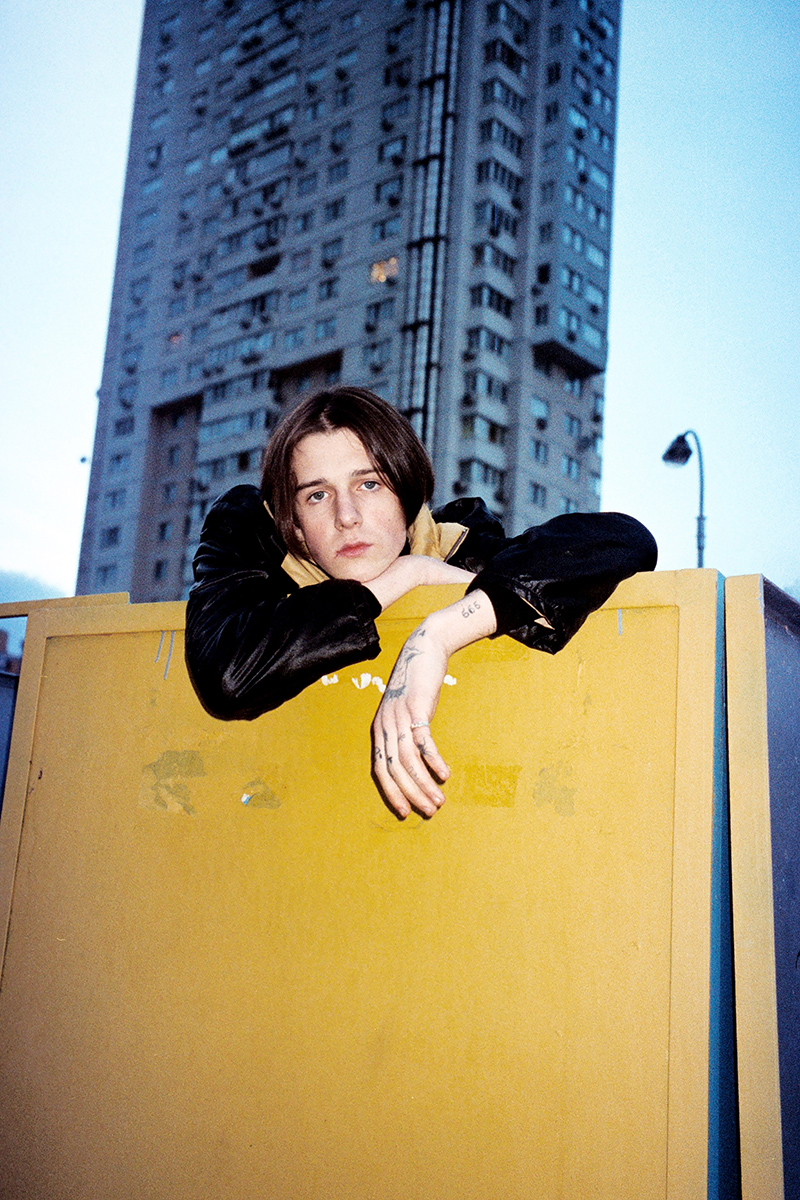
Oleg from Kyi in 2016. Yana Franz, for her series “Young Ukrainan People” in which she is working at the intersection of fashion and documentary photography. (2020).
|
|
|
|
|
| |
|
|
|
| |
Exploring
UKRAINE
A closer look at a
photographer’s series
|
| |
|
|
|
|
|
After the annexation of Crimea, ten thousand Crimean people left their homeland and moved to mainland Ukraine. The UN refugee agency reports that most of them are Crimean Tatars, and a third are children. Almost a hundred Crimeans are behind bars on the peninsula and in Russia on fabricated charges. The most infamous case against “terrorists” on Russian Federation, known as the Hizb ut-Tahrir case, had a deep effect on people in Crimea. Hizb ut-Tahrir al-Islamia is a political party that seeks to establish Sharia law by non-violent means. When Crimea was under Ukrainian control, its members and supporters could gather freely for rallies. In Russia, this organization is banned and classified as terrorist. But in Crimea it’s not even necessary to be a supporter of this party to fall into suspicion with the security services. It’s enough to discuss, at home in the kitchen or in the garage, topics that concern an apolitical Muslim: The meaning of life or everyday rituals : The large families of the prisoners were left alone without a breadwinner, and with the stigma of being relatives of a "terrorist".
This project is about them, the relatives of these political prisoners - and not only those affected by the Hizb ut-Tahrir case, but also other less well-known cases from Crimea. These are people whose lives changed dramatically one morning, when their homes were searched.
|
| |
|
 |
| |
|
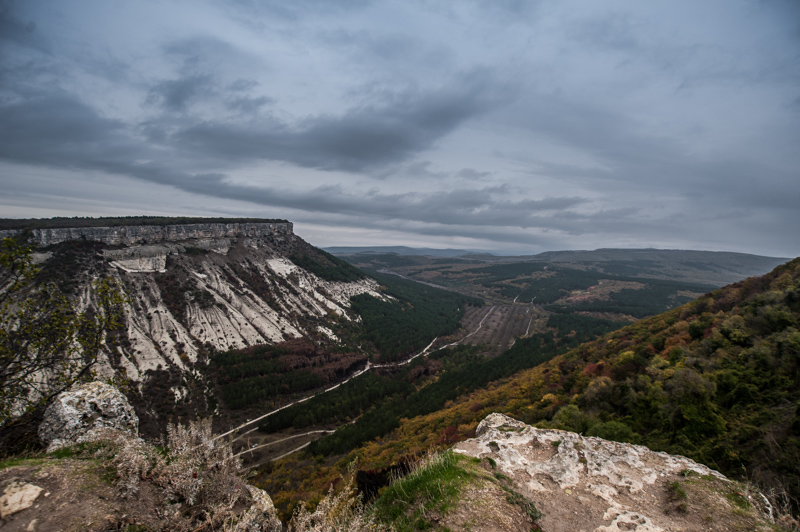
View from Chufut-Kale, near Bakhchysaray, Crimea.
|
|
|
|
|
|
|
|
 |
| |
|
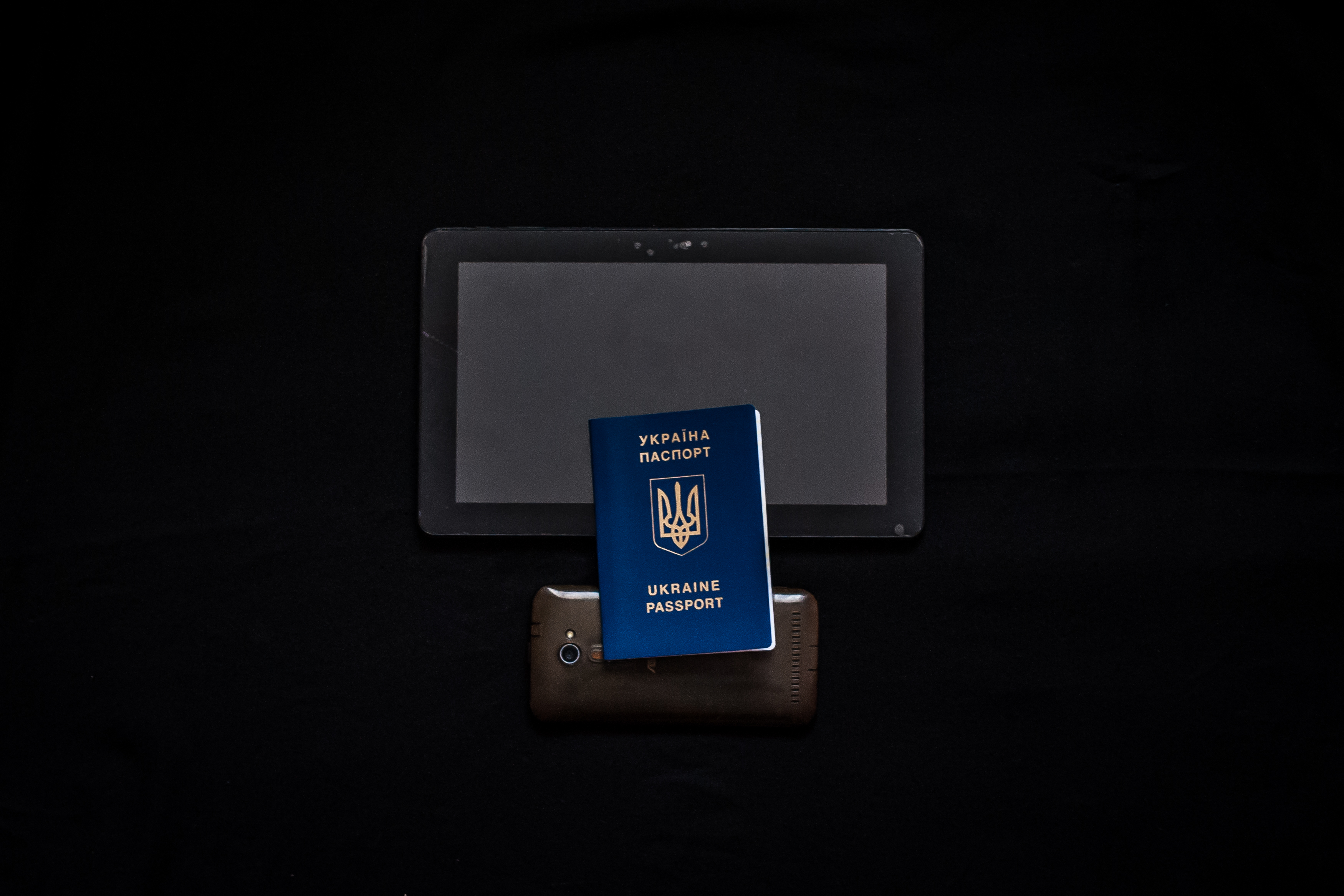
The passport and gadgets of Ismail Ramazanov, seized during a search for material evidence in the criminal case against him. Ismail was accused of extremism and inciting ethnic hatred on his internet radio station “Zello”, for which he was sentenced to six months in prison. Ramazanov was released after the article of the law was decriminalised.
|
|
 |
| |
|
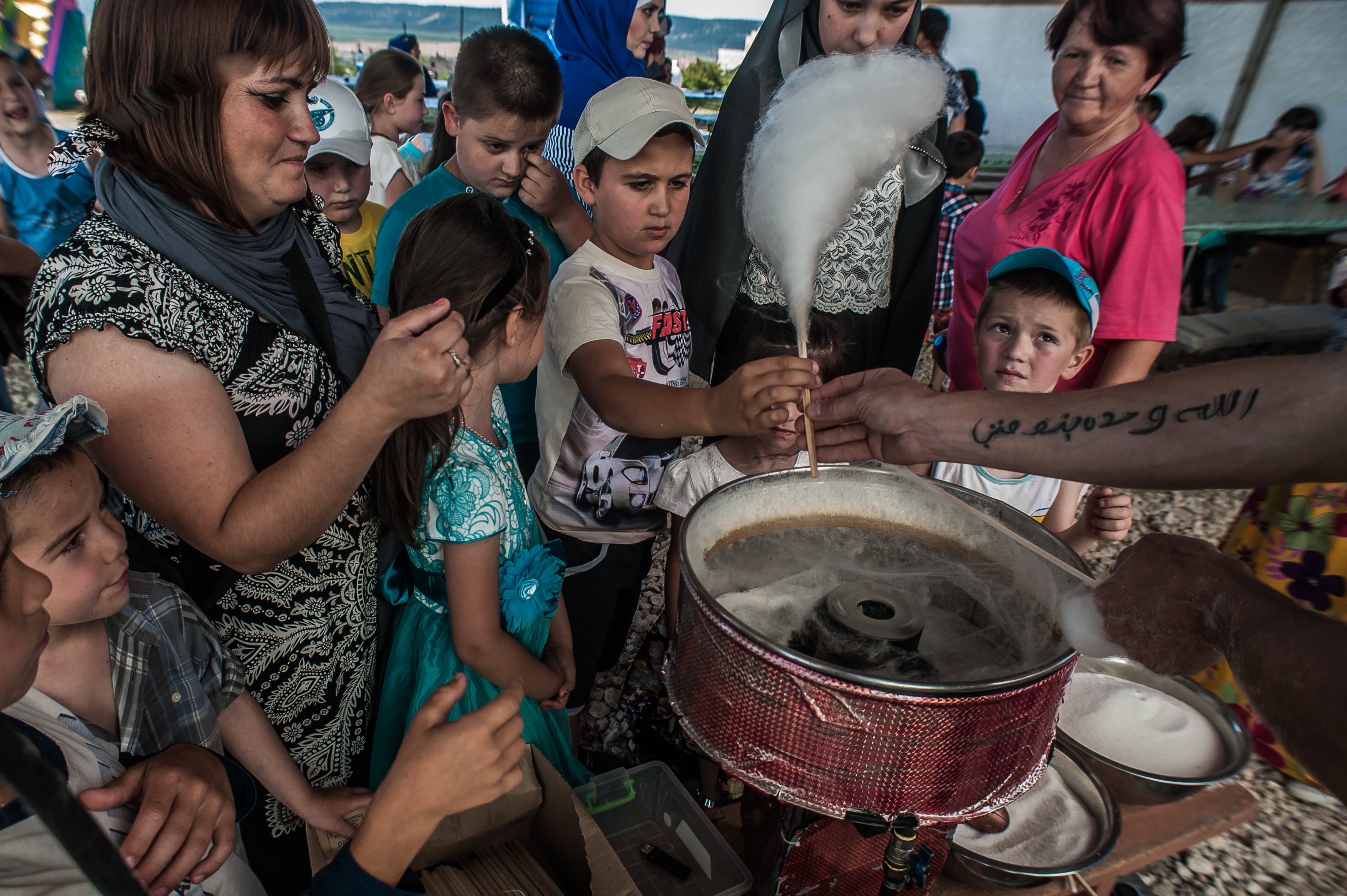
Children waiting for cotton candy during the celebration of Uraza Bayram (Eid al-Fitr) [one of the two most important religious holidays in Islam] in Chair-Jami [mosque] in Bakhchysaray. In the last few years, such celebrations aren’t just a religious tradition, but also a form of protest, because local authorities do all they can to prevent them.
|
|
|
|
|
|
|
|
 |
| |
|
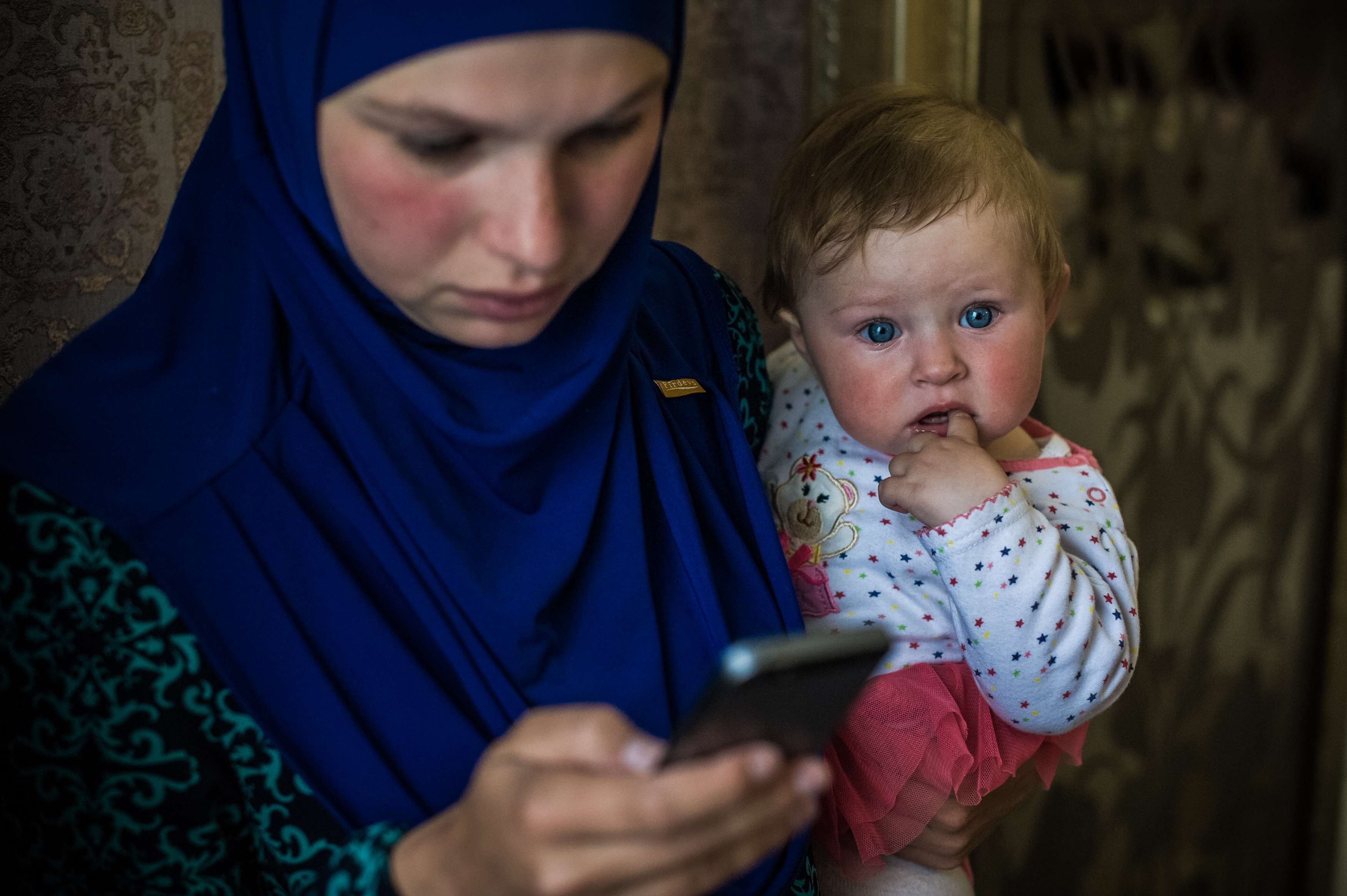
Anna Bogachova, wife of the Yalta "Hizb ut-Tahrir" figure Vadim Siruk, holds her daughter Hanifa during a “Crimean solidarity” meeting in Staryy Krym. The girl was born after her father's arrest. Vadim Siruk is a Ukrainian Muslim.
|
|
|
|
|
|
|
|
 |
| |
|
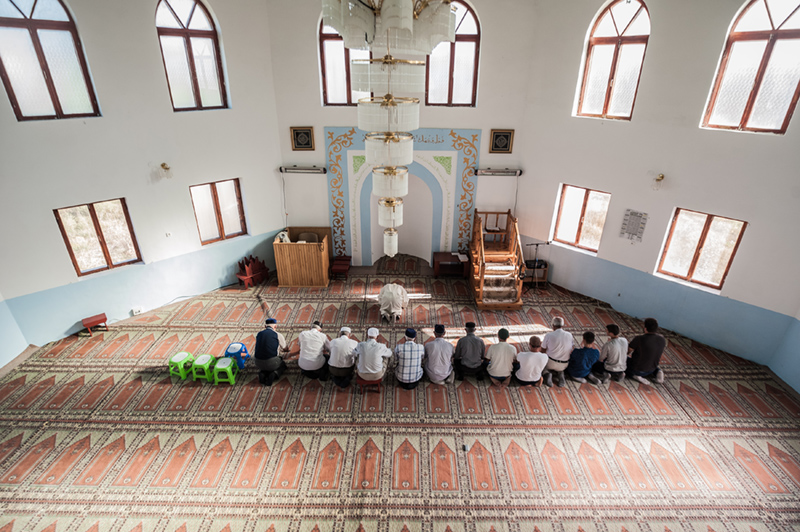
Crimean Tatars pray during the Eid al-Adha celebration in Feodosia, Crimea.
|
|
|
|
|
|
|
|
 |
| |
|
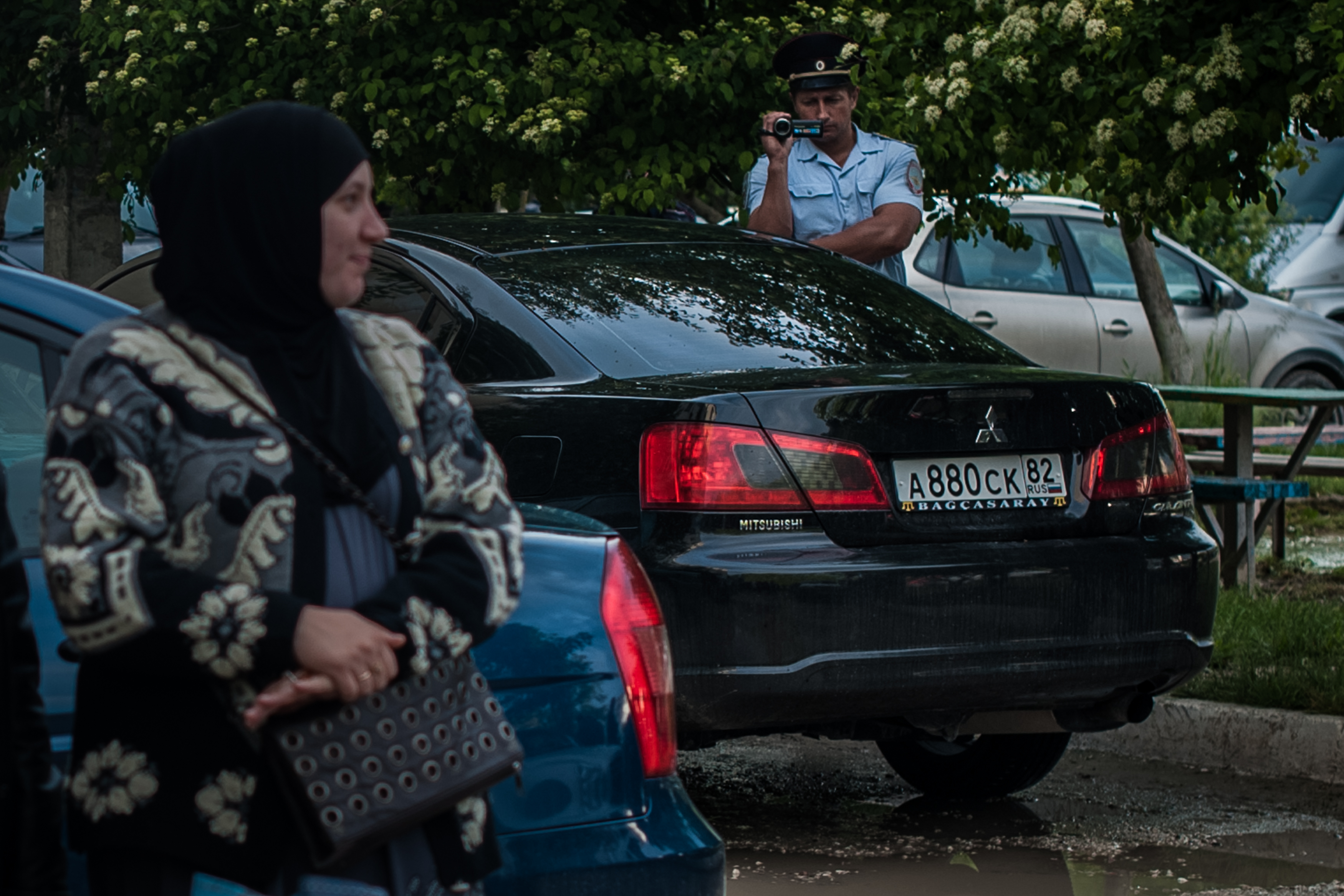
A policeman films people who came to pray for the missing Crimean Tatar activist Ervin Ibrahimov on the anniversary of his abduction near his house in Bakhchysarai, Crimea.
|
|
 |
| |
|
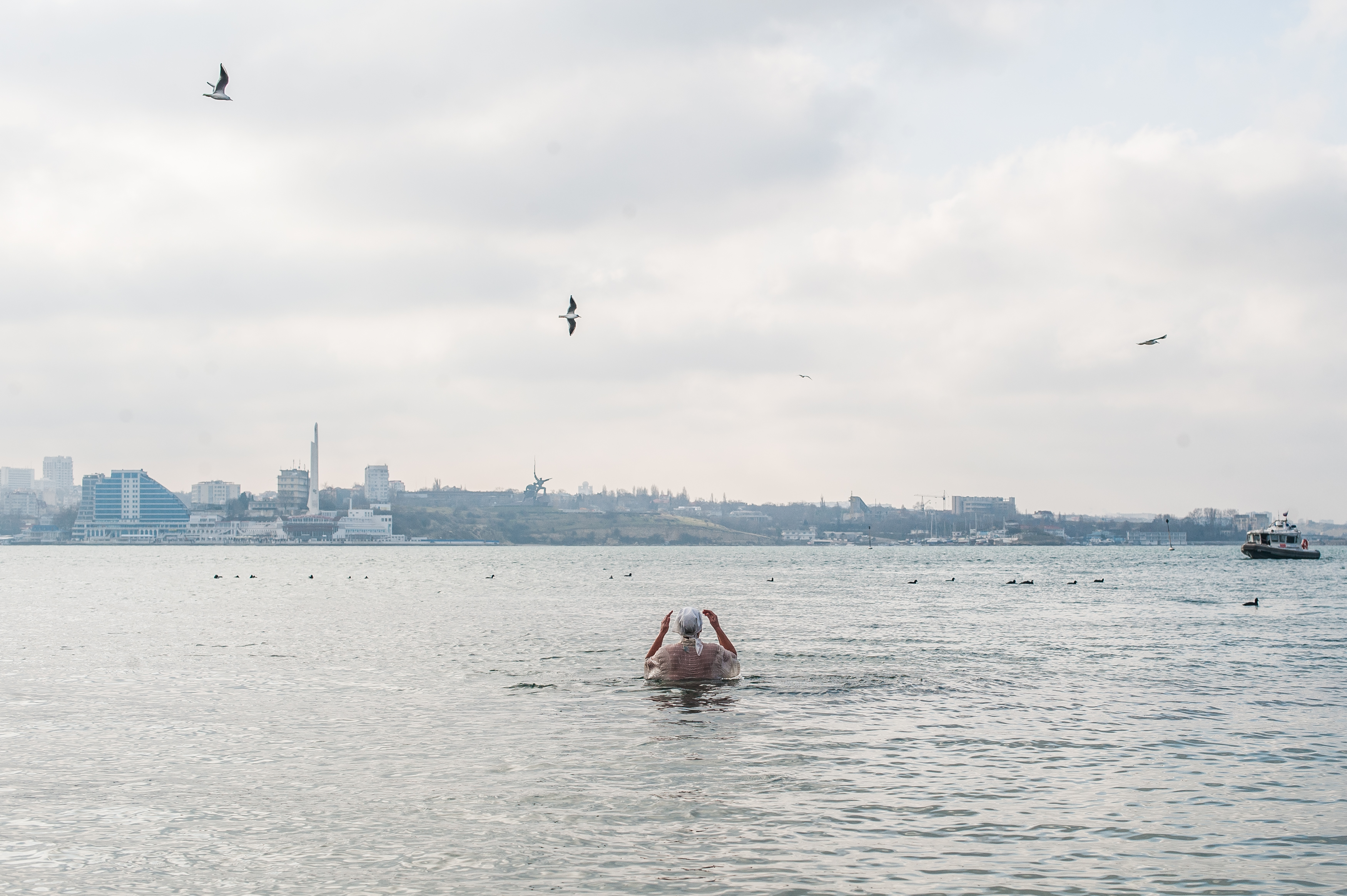
A woman "epiphany bathing" in Matyushenko Bay in Sevastopol, Crimea.
|
|
 |
| |
|
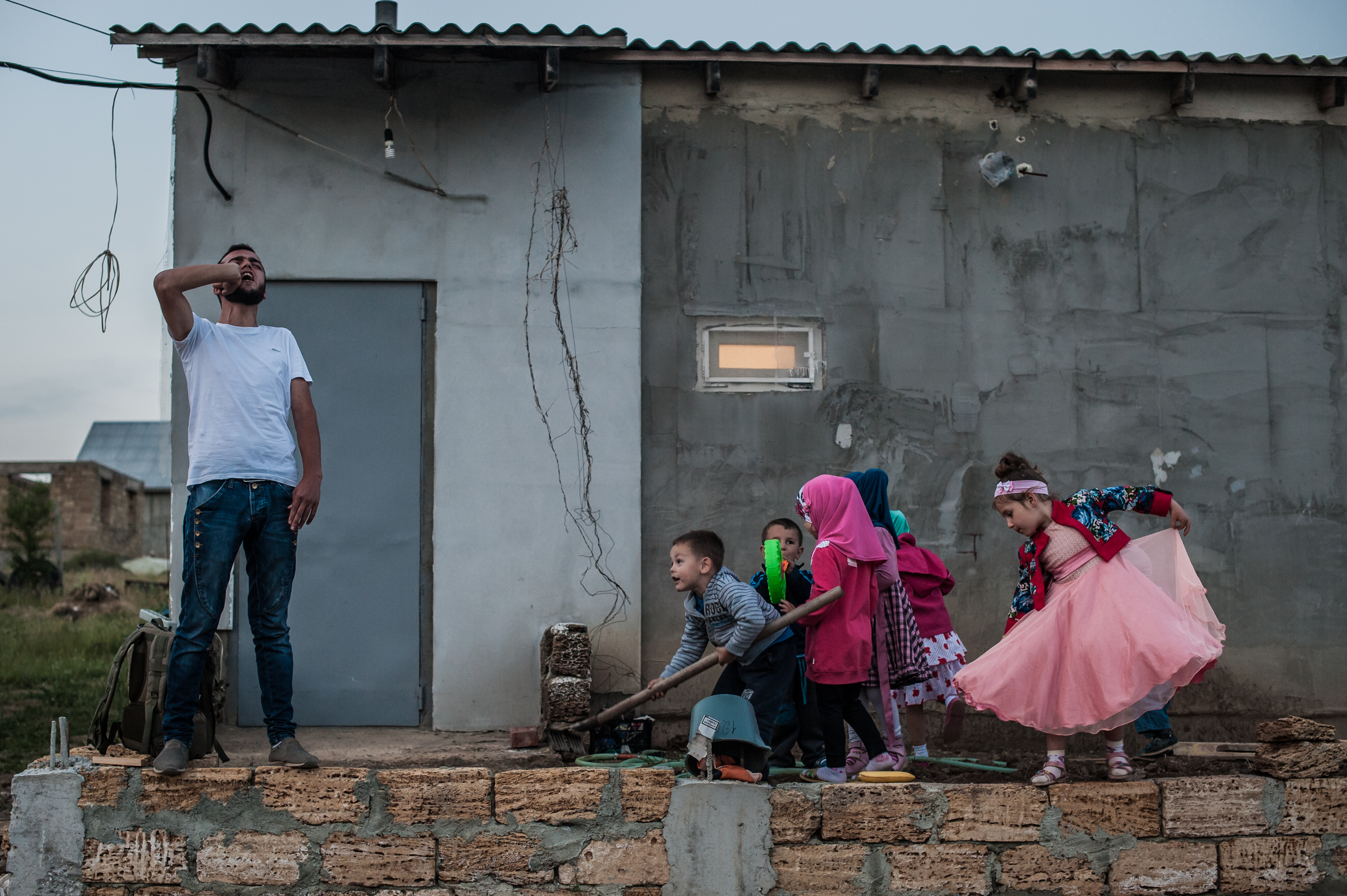
Children listen to an azan [a prayer call] by the local muezzin before the Iftar [the dinner after a fasting day during Ramadan] in the Abdullaiev family house in the village of Strogonovka near Simferopol, Crimea. Uzeir and Teimur Abdullaiev, the key figures of the Simferopol Hizb ut-Tahrir case, are known on the peninsula as Taekwondo coaches who were accused of collaborating with an organization recognized as terrorist in the Russian Federation.
|
|
| |
Alina Smutko is a documentary and sports photographer and photojournalist, currently based in Kyiv. An important part of her professional activities is visual storytelling and developing personal long-term projects that concentrate on ethnic, social, and religious conflicts, life in a post-conflict zone, historical memory, and national identity. Her main areas of work are Ukraine, primarily Crimea and the Donbas region, South Caucasus, and other post-Soviet countries.
|
|
|
|
|
|
|
|
Reflecting
UKRAINE
An observation on the impact of images
|
| |
|
|
|
| |
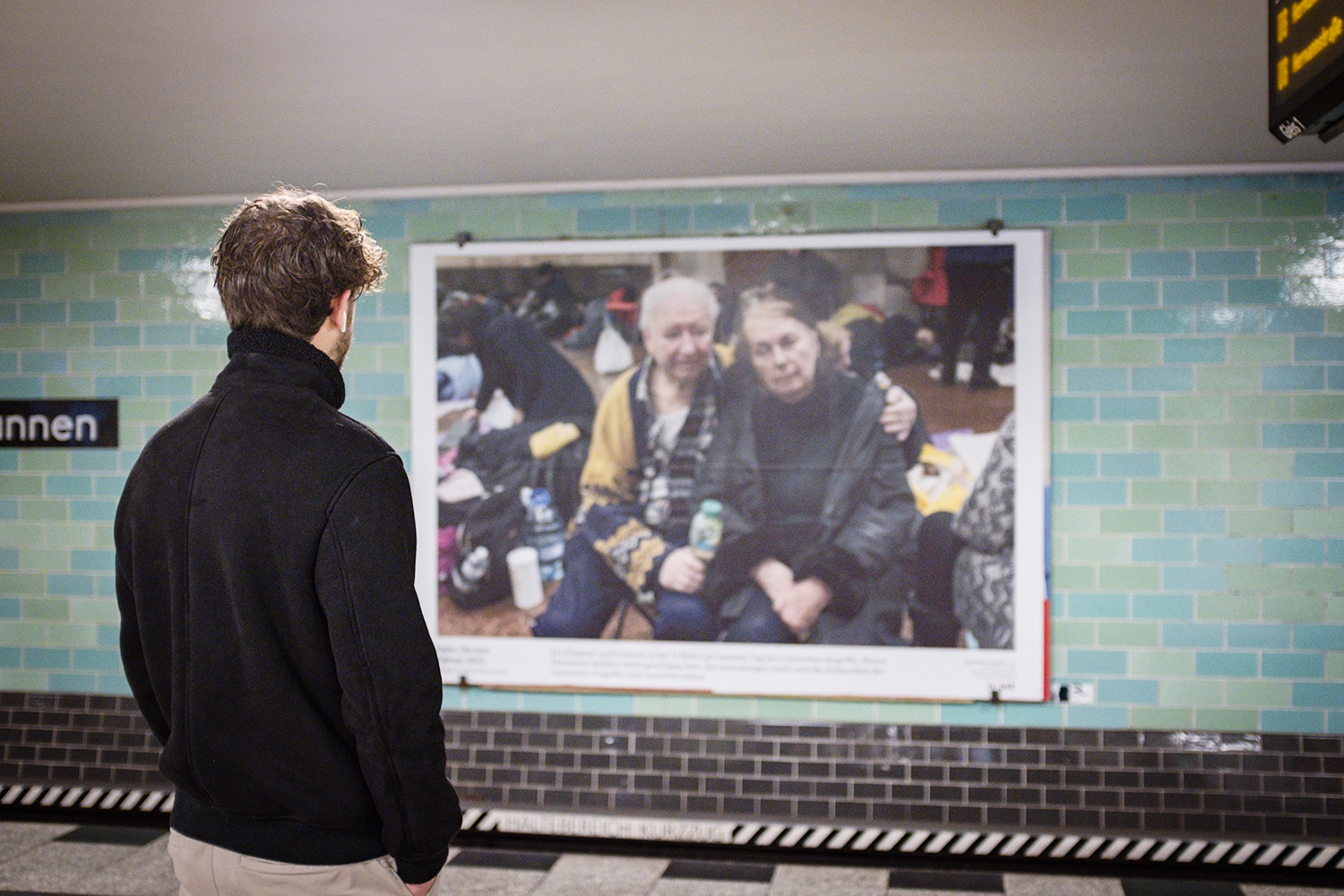
“Next Station Ukraine” in the Berlin Subway Station Gesundbriunnen Photo: Photo: Hannah Wilson, n-ost / Serhii Korovayny (orginal image)
|
|
| |
"Next Station Ukraine"
It has been nine months since Russia started its full-scale war, and we have all seen many images of it. We saw war crimes, destroyed houses, children who lost their families, and refugees everywhere. But the more terrifying consequences of the Russian invasion we see, the less emotional we often feel about them.
Our “Next Station Ukraine” project is an attempt to make the war and its impact on Ukraine more visible again. We are showing images of Ukrainians sheltering in Kyiv and Kharkiv subways, the safest place during Russian air raids, in three of Berlin's subway stations. We show them on billboards where people are used to seeing commercials. It is not a campaign, it is an attempt to find another medium for journalism and documentary photography.
During the 10 days of this exhibition, we have noticed many Berliners shift their attention from their daily routines, pause, and look attentively at these images.
|
|
| |
Anastasia Anisimova
Project manager of the n-ost project “Next Station Ukraine” (together with Stefan Günther)
|
|
|
|
|
|
|
| |
|
| |
|
|
| |
 |
| |
|
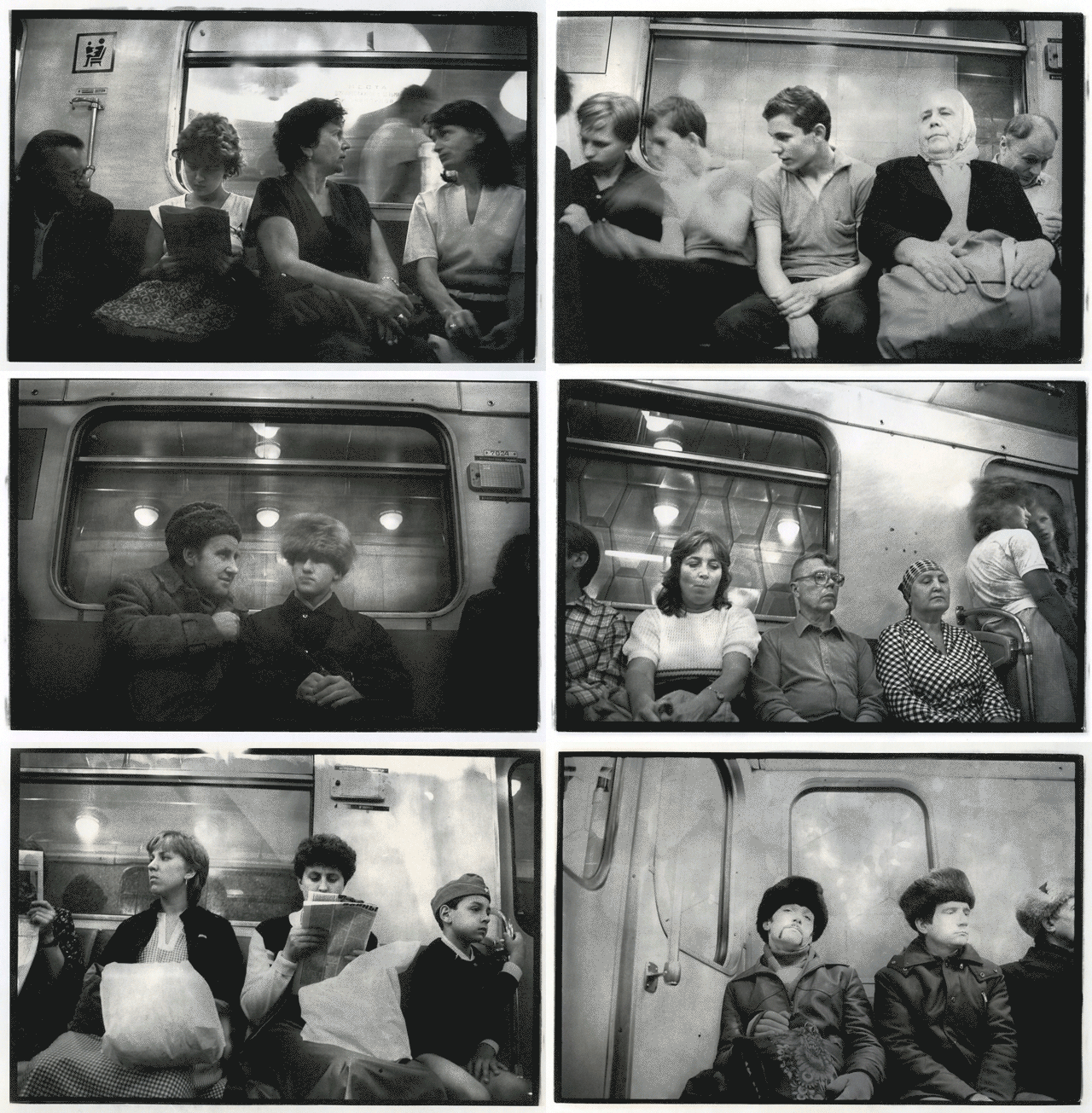
Misha Pedan’s work ”M” is a poetic chronicle of the Ukrainian Soviet Socialist Republic. All the photographs were taken while commuting on the Kharkiv subway in 1985-86. Each day, Pedan travelled for 45 minutes into town and 45 minutes back, spending some 1,000 hours on the train.
Misha Pedan was born and raised in Kharkiv, Ukraine, in the former USSR. Since 1990, he has lived in Sweden. He was part of the famous Kharkiv photo school, a group of photographers who became representative for the new Soviet photo art at the end of the eighties. He has been working as a head teacher at the photo school Kulturama in Stockholm for the past 15 years and has curated several international photography projects.
|
| |
|
|
|
|
| |
|
|
|
| |
Reading
UKRAINE
A short essay on the creation of images in Ukraine
|
| |
|
| |
A low-level state of emergency
|
|
|
|
| |
Of all the Ukrainian documentary films made in the last few years, the most striking are those that take a look at the east of the country and show the social conditions there. Directors such as Oksana Karpovych and Alisa Kovalenko have found images of everyday life that are hard to forget: Female soccer players, siblings teaching each other, or commuters in the electrychkas, the local trains mostly designed in the Soviet era. They all show children of an unfinished political and economic transformation.
These directors give us fragile portraits. They show civilians who have survived the last eight years under Russia's overt and covert war, which began back in 2014 - something many in Western Europe tend to forget. These films often show towns - including Bakhmut and the region around Avdiivka - where the war is raging most brutally today, though it is rarely caught on camera.
If you seek out striking images of that region from before 2022, they convey a low-level state of emergency - they appeal for your care and solidarity, like the poems of Serhij Zhadan. Whether they show everyday school life or a singing competition, there always seems to be military equipment crossing the frame. The bombs don't always strike, as at the beginning of Iryna Tsilyk's 2020 film portrait "The Earth Is Blue As An Orange," but the protective measures against deadly artillery are familiar to every child. Tsilyk's film follows a mother - a veterinarian and mechanic - and her five children, who do not want to leave their home in the Donbas. The daughter of this brave woman tries to apply for work as a camerawoman, and makes a film within the film, much of which takes place in bomb shelters, focussing our view on the simple routines of everyday life. This is representative of many images from Ukraine in recent years. The calmness of the individual portraits is striking. Every second of this life suddenly takes on an extra weight. For the daughter, the camera becomes an opportunity to leave the province. But it is about more: These pictures are meant to save a piece of normality and civilization.
|
|
| |
“Ukraine captivates with its diversity and contradictory history.”
|
|
| |
This leads to another key moment in the creation of images of Ukraine in recent years. Images of the different landscapes in Ukraine often seem to me like a hinge. The topographical peculiarities of the Donbas, the cone-shaped mountains of coal in winter, open a door - and not only for me as a faraway visitor. Within Ukraine, too, interest in the lesser-known parts of the country has risen massively since 2014. Many films, as well as conversations with colleagues and authors like Oksana Grytsenko, Oleksandr Techynskyi, or Oleg Chorny, have opened my eyes: Ukraine captivates with its diversity and contradictory history. I felt this myself during the shooting of my film about forced labourers under Nazi occupation in Ukraine. Linguistic variety, regional specificity, but above all Ukraine's irrepressible will for independence, all testify to cohesion and diversity at the same time.
If Ukraine succeeds in defending the possibility of diversity, it will remain a beacon in this region. A cab driver from Azerbaijan put it in a nutshell to me during a long night drive through Kyiv: If the people of Ukraine win, then everyone in the neighbouring post-Soviet countries will know that it makes sense to keep fighting for this piece of dignity.
Marcus Welsch studied philosophy, literature and directing, worked on feature film productions. Since 2002 documentary film director. Landscape Stories (2012 nomination longlist German Documentary Film Award). Reportages from Finland, Serbia, USA and Poland. Film work in Bosnia, Croatia, Kosovo, Ukraine and Poland, among others.
|
|
|
|
|
| |
|
| |
| |
|
|
|
|
| |
 |
| |
|
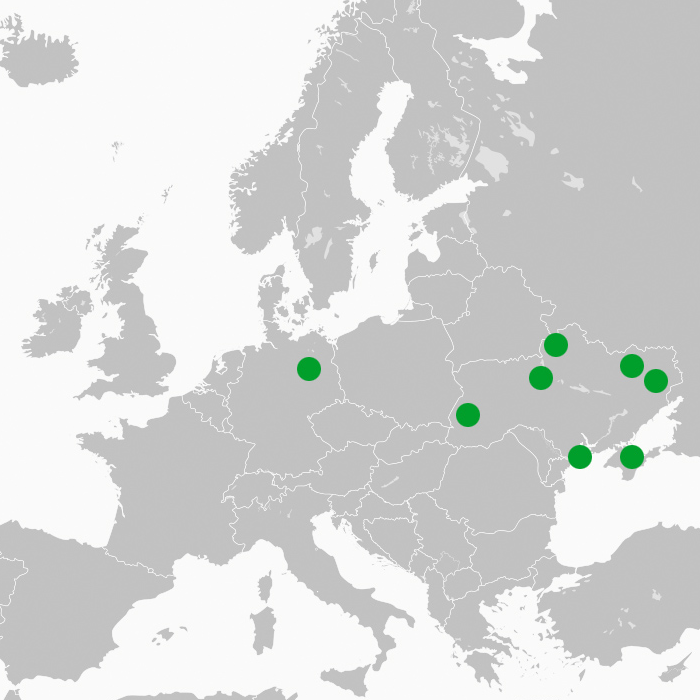
THE LOCATIONS OF THIS ISSUE
|
| |
|
|
|
|
|
| |
|
| |
| |
| |
Photographers: Mykhaylo Palinchak, Kirill Golovchenko, Stanislav Senyk, Julie Poly, Lesha Berezovskiy, Andriy Lomakin, Igor Chekachkov, Yana Franz, Alina Smutko
Text authors: Marcus Welsch
Editorial team: Laura Naum and Petrică Mogoș (Kajet Journal), Karolina Mazurkiewicz, Magdalena Kicińska (Pismo Magazin), Stefan Günther (n-ost) and Ramin Mazur.
Design: Philipp Blombach
Copy Editing: Ben Knight
|
| |
|
|
|
|
|
|
|
| |
|
|
|
| |
| |
| |
|
|
| |
| |
 |
| |
|
|
|
| |
|
|
|
|
|
| |
If you like the publication, please follow us on the european images Instagram account!
This is the eighth edition of european images, a project by n-ost, in partnership with Kajet Journal (RO), AthensLive (GR) and Pismo (PL) supported by Allianz Kulturstiftung and the Foundation for Polish-German Cooperation.
Coordinated by n-ost, documentary photographers will meet weekly on Wednesday 6pm CEST throughout the entire period of the project.
If you are a European photographer and want to join the meeting or provide images for the publication please write a short introduction of your work to europeanimages@n-ost.org.
|
| |
|
|
|
|
|
| |
|
|
|
| |
| |
| |
 |
| |
|
|
|
|
|
|
|
| |
|
|
|
| |
| |
 |
| |
|
|
|
|
|
| |
|
|
|
| |
| |
|
|
| |
 |
| |
|
|
|
|
|
| |
|
|
|
| |
| |
| |
initiated and coordinated
by n-ost
|
| |
|
|
|
You've received this email because you are a member or a friend of n-ost, AthensLive, Kajet or Ramin or subscribed to european images
|
|
|
|
|
|
|
|
|
|
| |
|
|
|