|
|
|
|
 |
|
| |
|
|
|
|
|
|
|
|
|
|
 |
| |
|
| |
Dear viewer, Photography has a long and rich tradition of documenting the environment for better or worse: As a visual tool, it provides evidence of exploitative practices and speculates on the future of unconquered lands that have evaded humankind’s corruption.
This new edition of the europeanimages photographic newsletter seeks to mark out new visual avenues through which the natural realm can be understood and explored. What is the role of photography today in relation to the ecosystem? What do honest and fair representations of nature and its fauna and flora look like?
Without trying to provide definite answers to these tangled questions, this newsletter makes an urgent point: The bottom line of the neverending relationship between humankind and nature may be something more than mere exploration, because the stakes are now higher than ever. Instead of inquisitive quests, we need to re-focus our efforts on interspecies cohabitation and survival.
|
| |
|
Petrica, Laura (Kajet, RO), Karolina, Magdalena (Pismo, PL), Pia and Stefan (n-ost, DE) – this issue’s editorial team
In Gmail the mail is often trimmed: Please click the link at the end of the mail to see the whole newsletter or click here to read it in your browser.
|
| |
|
|
|
|
| |
|
|
|
| |
| |
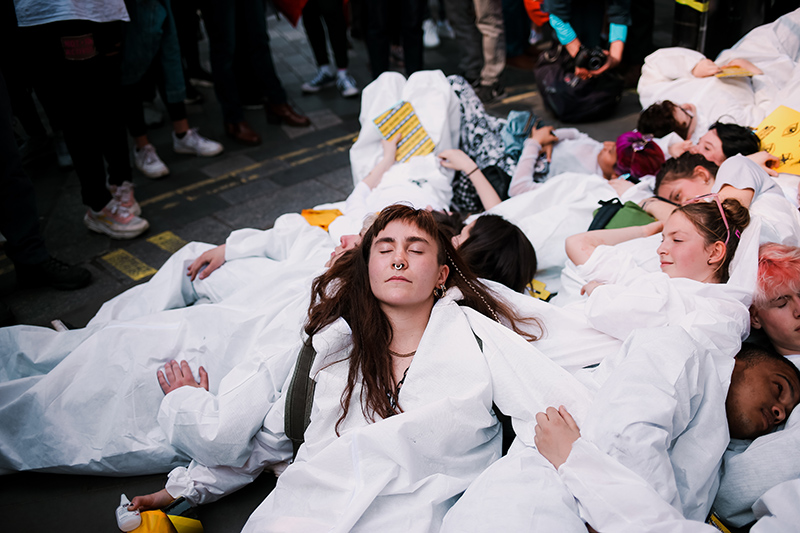
Top title image: Young activists of the “Extinction Rebellion” movement staging a “die in” in London in 2019 outside various fashion stores on Oxford Street. Talia Woodin (London) for her documentation of the protest. (October 11, 2019)
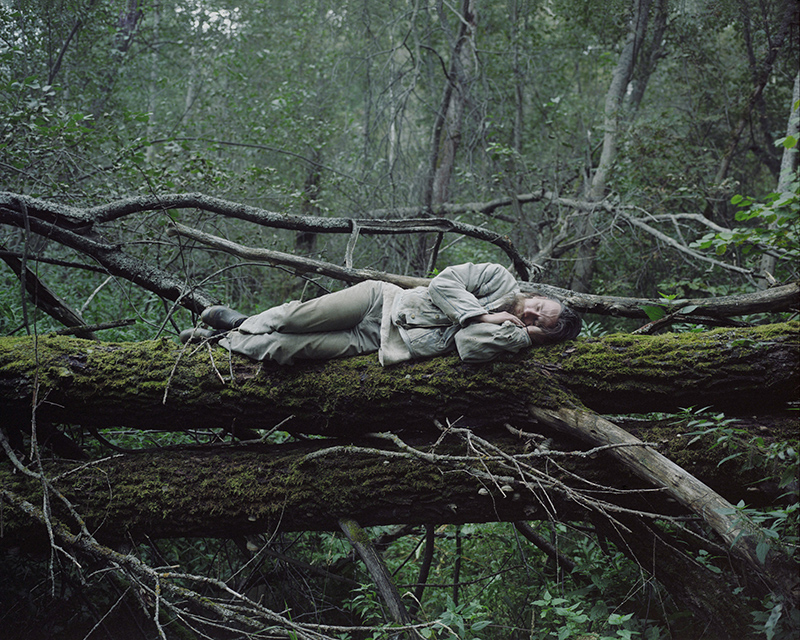
Bottom title image: A hermit in the Russian forests. The people photographed in this series all chose to escape from social life and live alone in the wild, far away from any villages, towns or other people. Danila Tkachenko for his series “Escape”. (2012-2014)
|
|
|
|
|
|
| |
|
|
|
|
|
| |
Seeing
NATURE
Single Images by Photographers
From all over Europe
|
|
| |
 |
|
|
|
| |
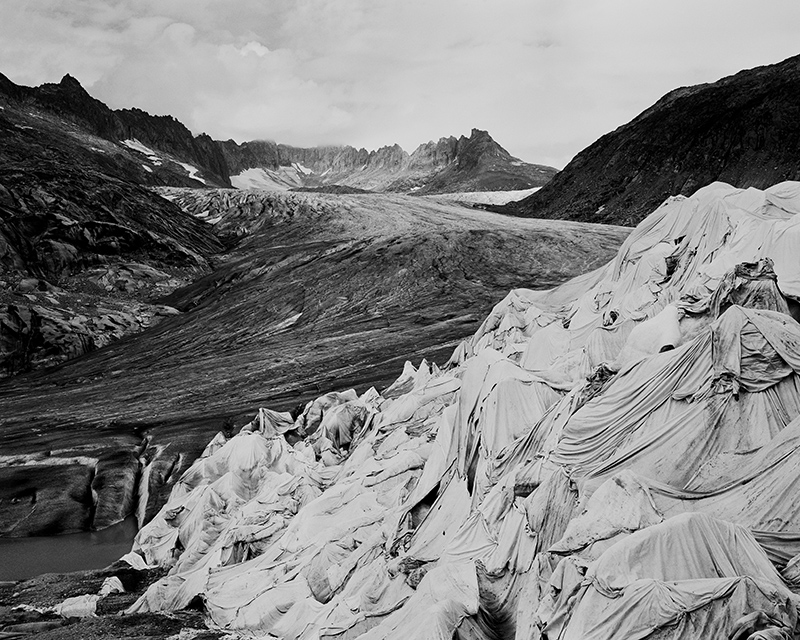
Every spring since 2009, locals who live near the Rhône Glacier in the Swiss Alps cover it with white blankets in order to save the melting glacier. Paul S. Amundsen (Bergen) for his series Europe, a long-term project about our continent. (2015-2018)
|
|
|
|
|
|
| |
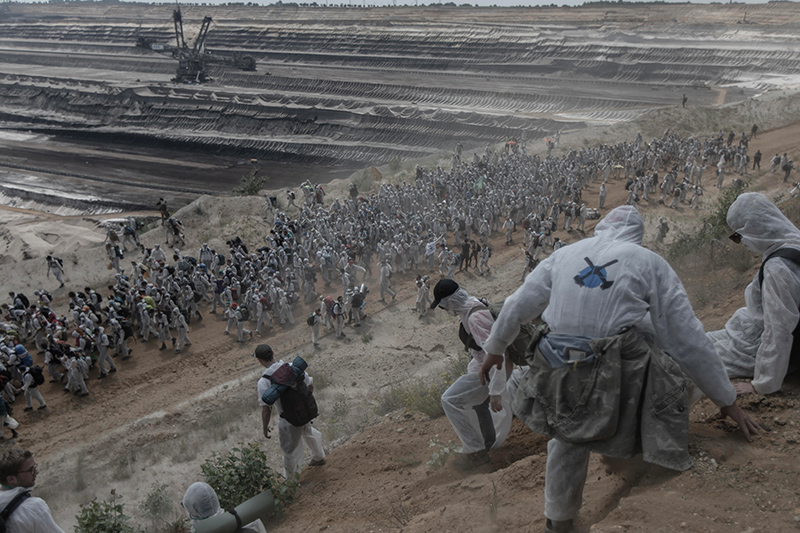
Activists of the “Ende Gelände” (“End of the Area”) movement in Germany occupying an open cast mine around the town of Viersen in the German Rhineland. Jedrzej Nowicki (Warsaw) for his series “One struggle, two fights”. (June 22, 2019)
|
|
|
|
|
|
|
| |
|
|
|
|
|
| |
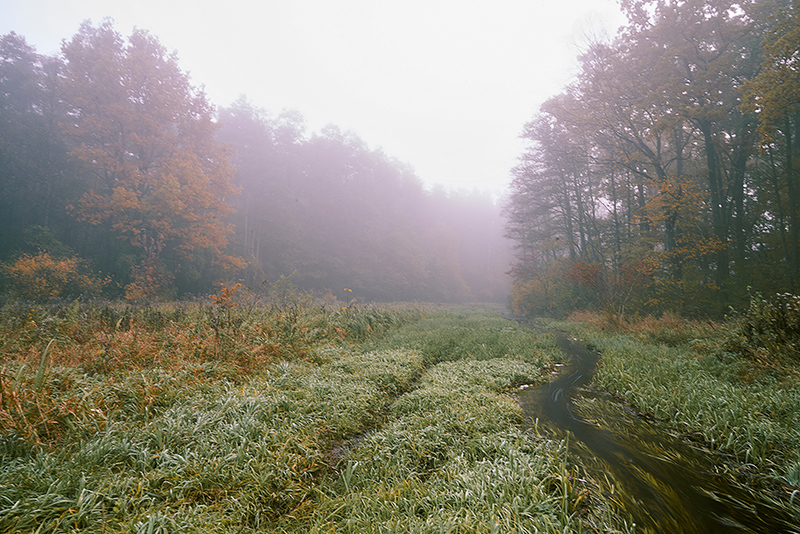
The River Mała, which means “small”, near Konstancin-Jeziorna, close to Warsaw. The photographer has been the unofficial spokesman for the river and its rights. To this day, he is involved in its protection and popularising knowledge about ecology on a very local scale. Daniel Petryczkiewicz (Warszawa) for his reportage on the river. (2020)
|
|
|
|
|
|
|
| |
|
|
|
|
|
| |
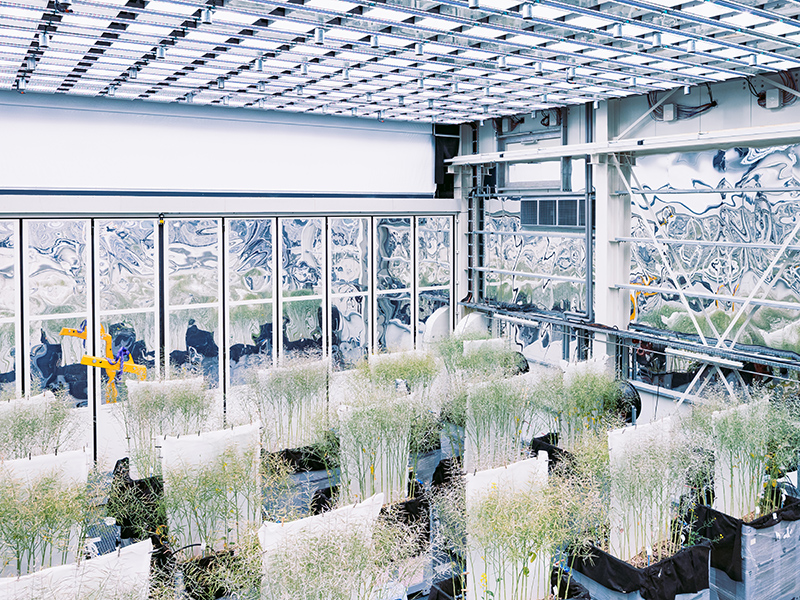
This fully-automated plant cultivation hall in the Leibniz Institute can imitate any climatic conditions. This makes it possible to study how different plant species react to changes in the environment or the consequences of climate change. Ole Witt for his series Food Sync. (2020-2022)
|
|
|
|
|
| |
|
|
|
|
|
| |
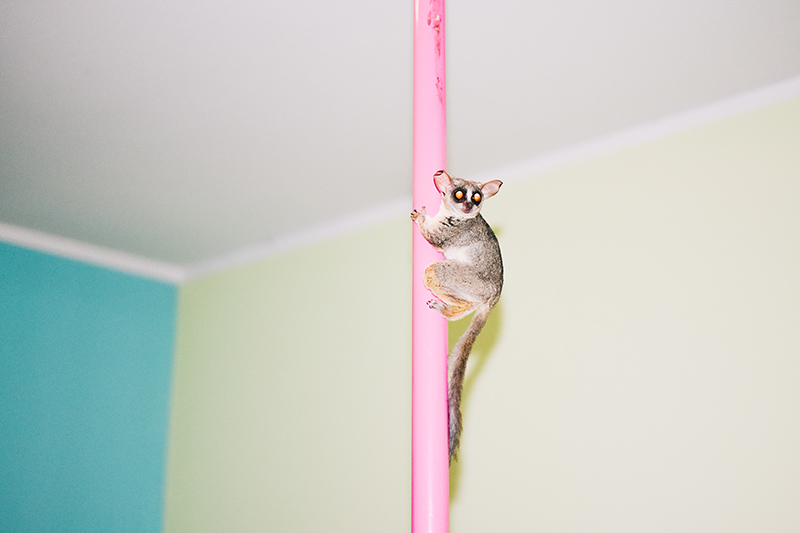
Masza is a galago, a small nocturnal primate from Africa. In the picture, she is climbing her private owner Renata’s dancing pole. Katarzyna Ślesińka for her series “Fantastic animals and how to pet them”. (2020-ongoing)
|
|
|
|
|
| |
|
|
|
|
|
| |
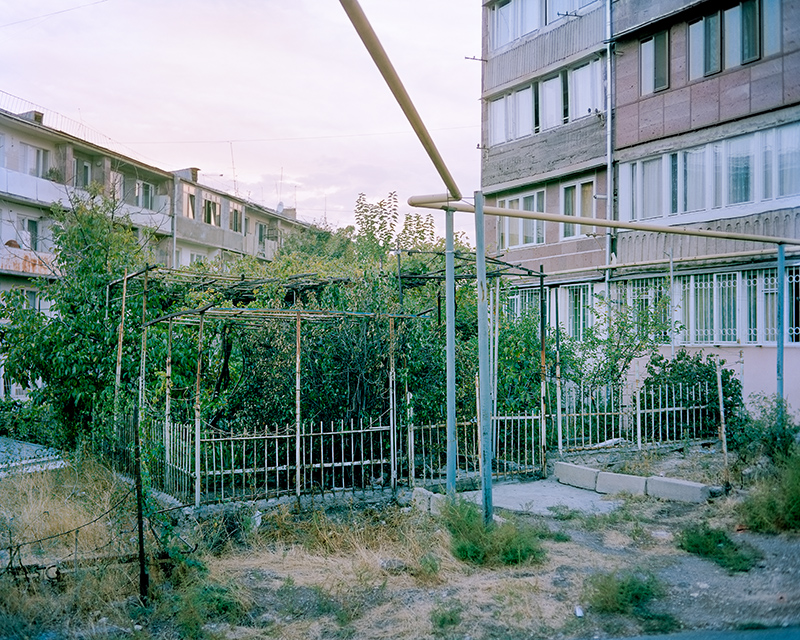
Traditional constructions, self-made from reused materials for growing grapes in Yerevan. Jan Brykczynski (Warsaw) for his series on urban gardening “The Gardener”. (September 2013)
|
|
|
|
|
| |
|
|
|
|
|
| |
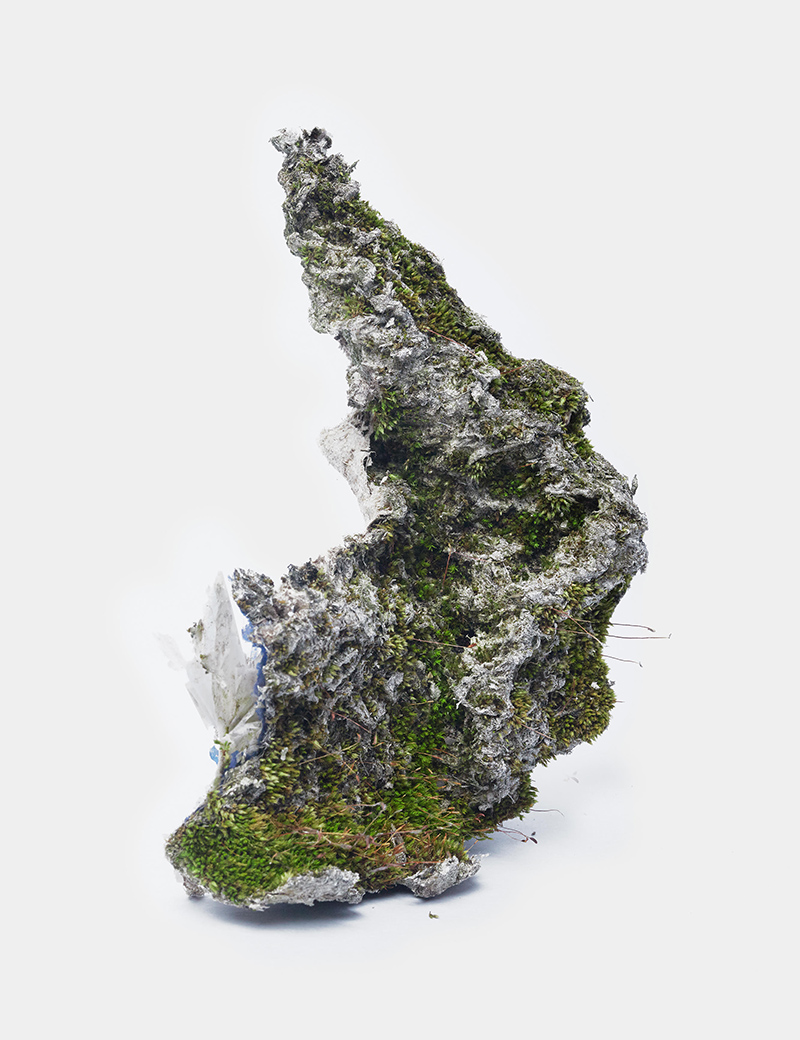
Overgrown polystyrene-cardboard with different plants, found in the Polish town Grudziądz. This object is part of the project “The Center for the Living Things”, a research pata-institution founded in 2016 that examines, collects, and propagates knowledge about new humanotic nature forms. Diana Lelonek for the documentation of the project. (2016)
|
|
|
|
|
| |
|
|
|
| |
Exploring
NATURE
A Closer Look at a
Photographer’s Series
|
| |
|
For several years, photographer and biologist Alex Tomazatos has been recording his work in the swamps of his native Danube Delta. Recently, he has returned to the Delta as a biologist and has been working on discovering viruses and preparing for disease outbreaks. “The vast majority of human infections (including HIV, malaria, dengue fever, influenza, SARS) originate from other animal hosts,” he says. “Rapid environmental degradation in today’s increasingly interconnected world is creating the conditions for new encounters of humans, domestic animals, and livestock with wild species, creating new opportunities for exotic or unknown pathogens to switch hosts and cause epidemics and pandemics.”
|
| |
|
|
|
| |
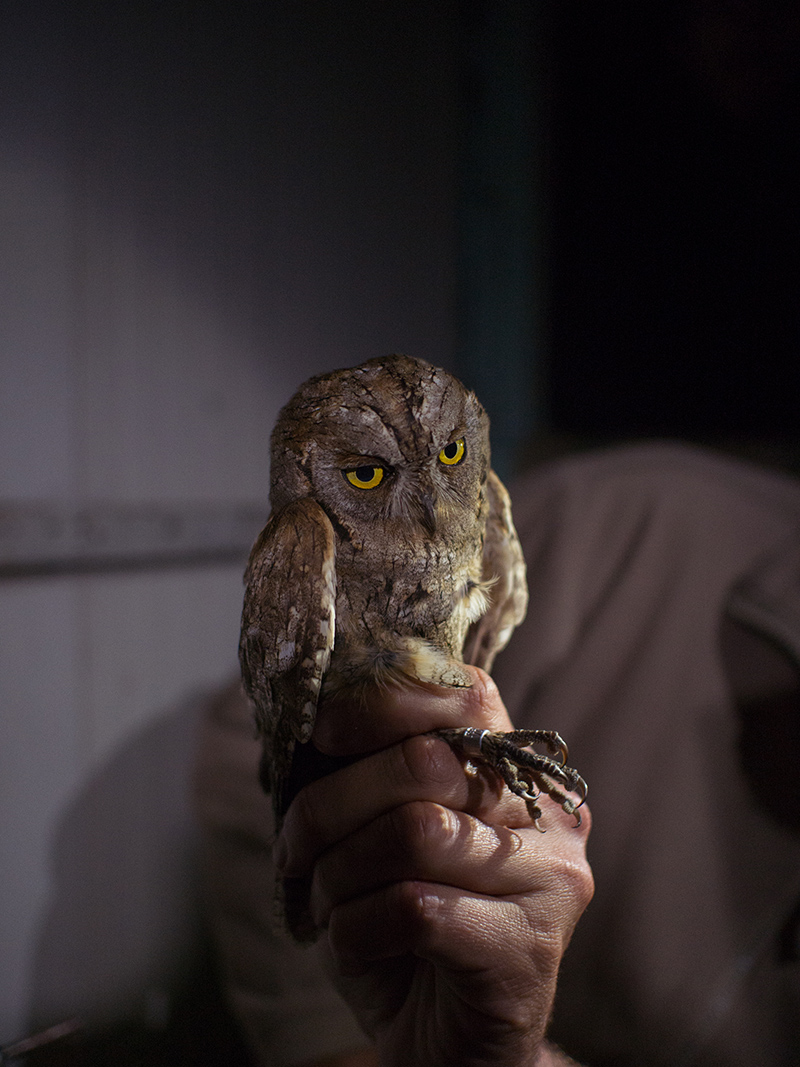
A Eurasian scops owl (Otus scops) captured during the monitoring of autumn migration. Tracking migration offers the chance to collect parasites that could travel over long distances. Sfântu Gheorghe, Danube Delta, 2016.
|
|
|
|
|
|
|
|
|
|
| |
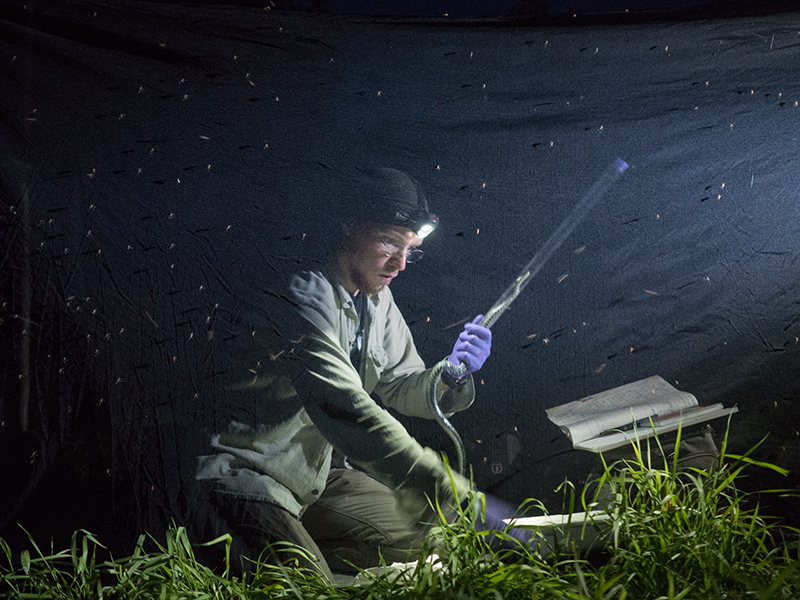
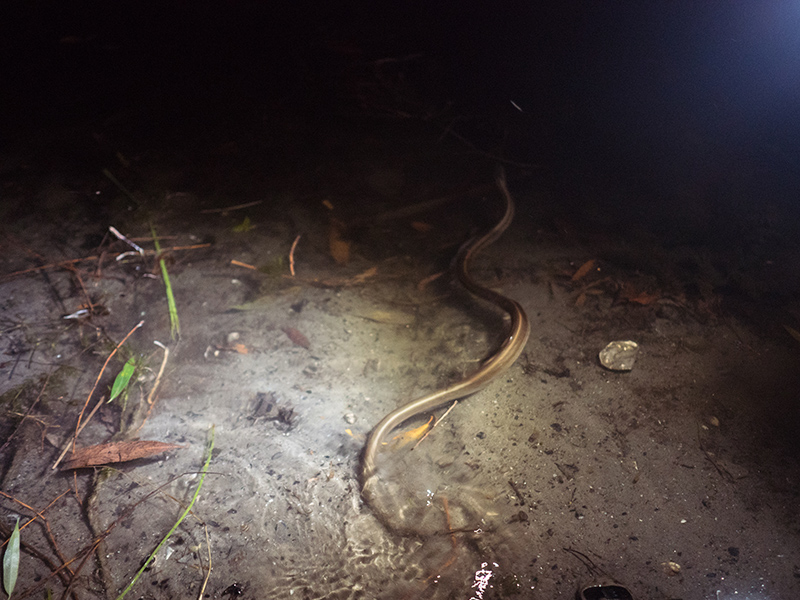
Sampling blood from snakes in order to evaluate the role of reptiles in arbovirus transmission. Lake Roșuleț, Danube Delta, 2017.
|
|
|
|
| |
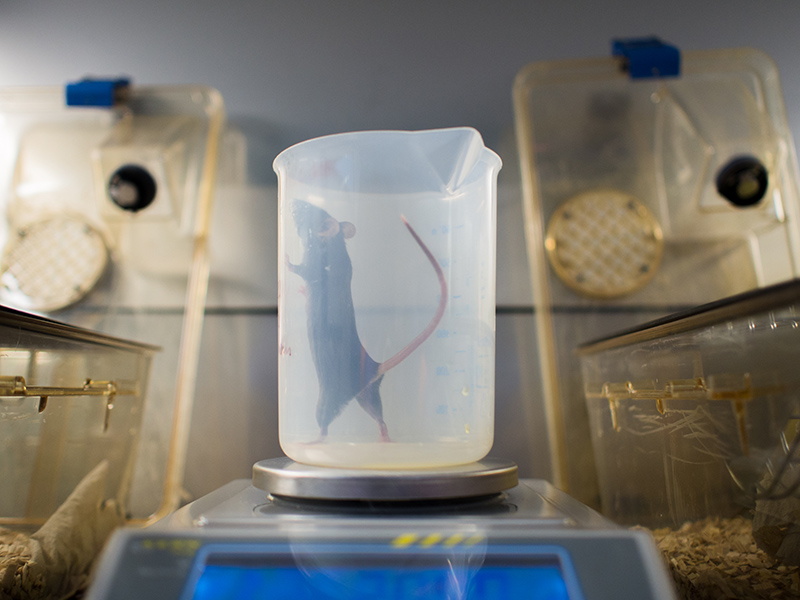
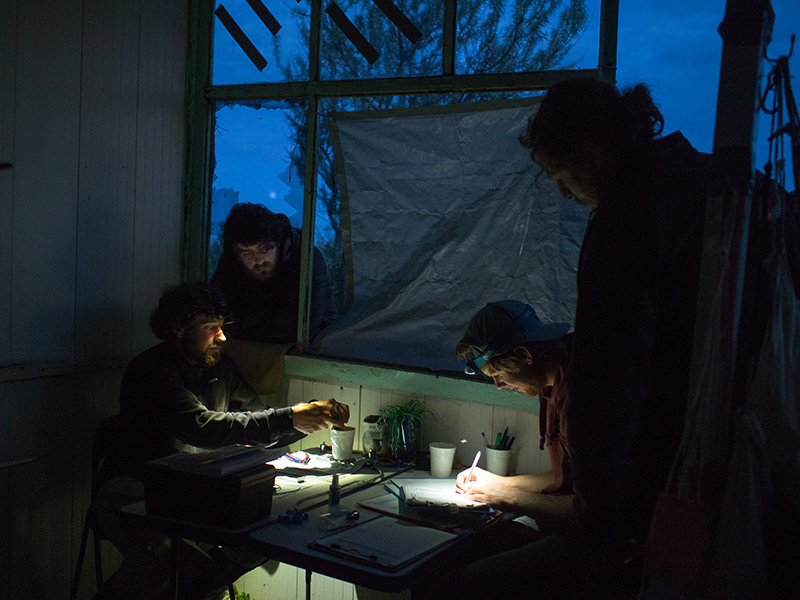
Experimental infection for evaluating the pathogenicity of a new potential tick-borne virus. Hamburg, Germany, 2017.
|
|
|
|
|
|
|
|
|
|
| |
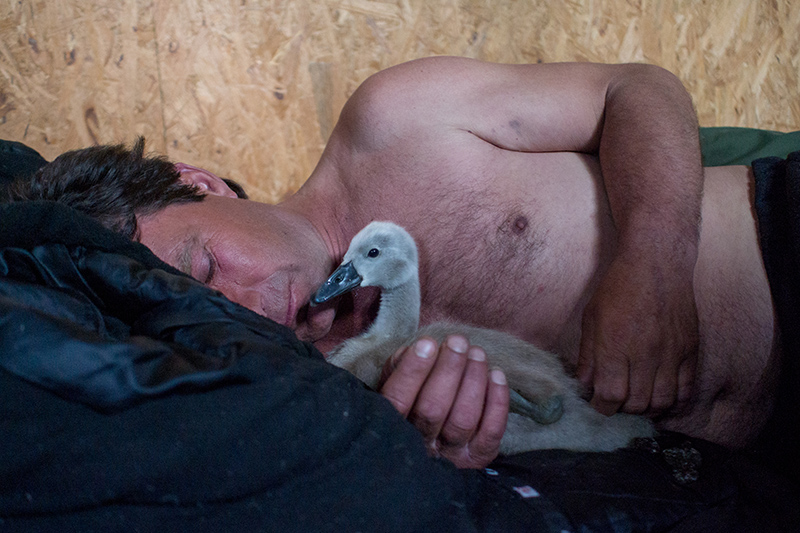
Shortly after receiving this cygnet as a gift, the fisherman released it so it could return to its family. Lake Roșuleț, Danube Delta, 2015
|
|
|
|
|
|
|
|
|
|
| |
Lake Roșuleț, Danube Delta, 2017
|
|
|
|
|
|
|
|
|
|
| |
Monitoring autumn bird migration. Sfântu Gheorghe, Danube Delta, 2016.
|
|
|
|
|
|
|
|
Reflecting
NATURE
An Observation on
Image Rights
|
| |
|
|
|
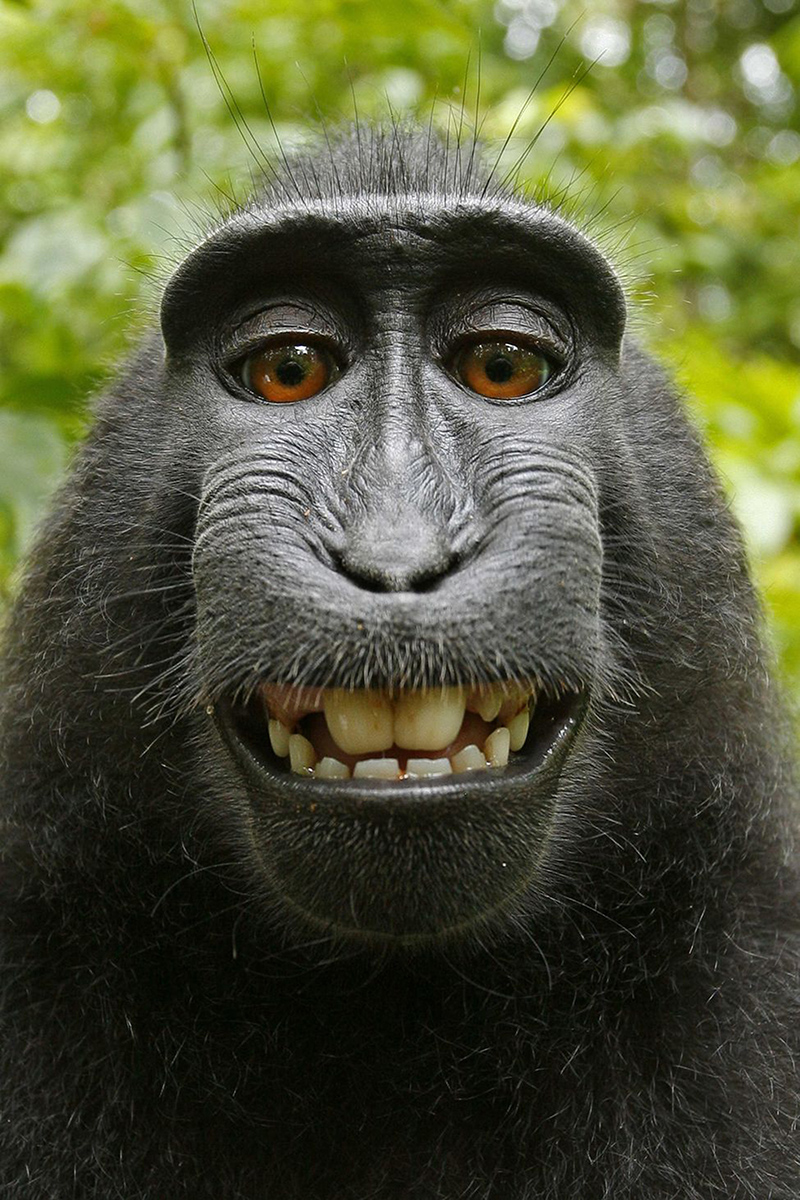
Self-portrait of a female Macaca nigra (Celebes crested macaque) in North Sulawesi, Indonesia, who pressed the remote cable release on Slater’s camera and and took a selfie. David Slater, 2011
|
|
| |
This image of the macaque Naruto, which became known as the “Monkey Selfie”, caused a long-running legal dispute. British wildlife photographer David Slater wanted to take a close-up portrait of the endangered crested macaques in Indonesia in 2011 and used the monkeys’ curiosity and playfulness to do so. He placed the camera on a tripod with a remote cable release and waited until one of the monkeys photographed itself. After initial publication in various magazines, Wikimedia placed the image in the public domain as “the work of a non-human animal,” adding that “it has no human author in whom copyright is vested.” The photographer sued the organisation, but the courts agreed with Wikimedia's reasoning and the photographer lost almost all potential income from the photograph. The animal rights organisation PeTA even wanted to establish that the monkey is entitled to the copyright, because he had pressed the shutter button. PeTA went on to claim in court that it was acting on behalf of the monkey, but eventually failed in 2018, as the court could not find a significant relationship between the organisation and the animal.
|
|
|
|
|
|
|
| |
|
| |
| |
Hearing
NATURE
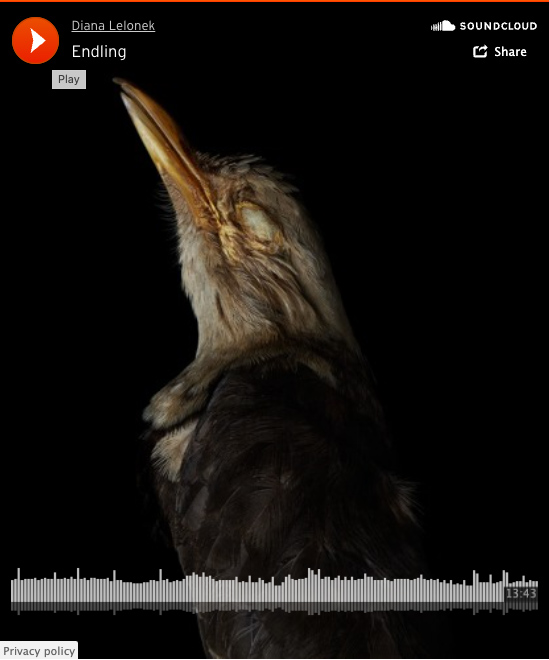
You can listen to this extern link while
reading the following short Essay
|
| |
|
| |
 |
| |
|
Composition from the audio installation “Endling”, Diana Lelonek, 2019. This installation refers to the inevitable extinction of species caused primarily by human activity.
|
| |
|
|
|
|
| |
|
|
|
| |
Reading
NATURE
A Short European Essay
|
| |
|
| |
Rethinking our Future Memories
|
|
|
|
| |
It all started in the wake of industrialisation and colonisation, but it is now barely confined to it. By appropriating land, water, air, other species, and other people, capital-wielding humans have put the entire planet on track for radical, systemic changes that have no precedent in Earth’s long history.
Indeed, we are now witnessing and starting to accept the terminal end of the Holocene order of things. The irreversible loss of myriads of animal and vegetable species, rapidly vanishing glaciers, burning forests, and the breakdown of entire ecosystems are only some of the elements that characterise the early stages of the unfolding Anthropocene, the geological epoch, dominated by human influences. What is also disappearing are the landscapes and cultural traits that were formed and cultivated over millenia through local and more benign reorganisations of the natural world. We are witnessing a moment—and the terrifying momentum—of permanent deletion.
|
|
| |
“It should no longer be easier to imagine the end of the Holocene than the end of capitalism.”
|
|
| |
How, then, do memory and oblivion fare in times of extinction, of disappearance and disintegration? And what does that do to our imagination? One way of rethinking our future memories is to reveal Holocene cultural paradigms of conservation and adapt them to our current technological capacity. Gene banks, resurrection biology, and de-extinction methods are some examples.
But wouldn’t that merely perpetuate the problem instead of preserving the ecosystems needed for planetary survival? The drift toward the systematic collapse of the climatic and ecological baselines of the Holocene and the impending uninhabitability of entire regions means, more than anything, that we have to exit the logic and the crescendo dynamics of the Anthropocene. It should no longer be easier to imagine the end of the Holocene than the end of capitalism.
Christoph Rosol is research scholar at the Max Planck Institute for the History of Science as well as a research assistant and co-curator at the Haus der Kulturen der Welt in Berlin. He has published widely on the historical epistemology of the climate sciences, the technosphere, and the Anthropocene.
|
|
|
|
|
| |
|
| |
| |
|
|
|
|
| |
 |
| |
|
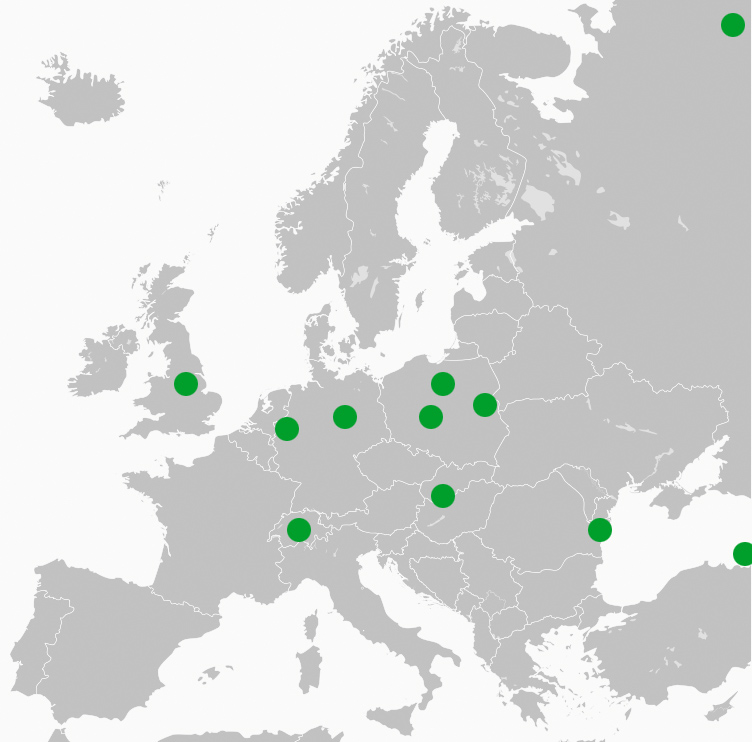
THE LOCATIONS OF THIS ISSUE
|
| |
|
|
|
|
|
| |
|
| |
| |
| |
Photographers: Talia Woodin, Danila Tkachenko, Paul S. Amundsen, Jedrzei Nowicki, Daniel Petryczkiewicz, Ole Witt, Katarzyna Ślesińka, Jan Brykczynski, Diana Lelonek, Alex Tomazatos, David Slater
Author: Christoph Rosol
Editorial team: Laura Naum and Petrică Mogoș (Kajet Journal), Karolina Mazurkiewicz, Magdalena Kicińska (Pismo Magazin), Stefan Günther and Pia Telebuh (n-ost).
Design: Philipp Blombach
Copy Editing: Ben Knight
|
| |
|
|
|
|
|
| |
|
|
|
| |
| |
| |
If you like the publication, please follow us on the european images Instagram account!
This is the third edition of european images, a project by n-ost, in partnership with Kajet Journal (RO), AthensLive (GR) and Pismo (PL) supported by Allianz Kulturstiftung and the Foundation for Polish-German Cooperation.
Coordinated by n-ost, documentary photographers will meet weekly on Wednesday 6pm CEST throughout the entire period of the project.
If you are a European photographer and want to join the meeting or provide images for the publication please write a short introduction of your work to europeanimages@n-ost.org.
|
| |
|
|
|
|
|
| |
|
|
|
| |
| |
| |
 |
| |
|
|
|
|
|
|
|
| |
|
|
|
| |
| |
 |
| |
|
|
|
|
|
| |
|
|
|
| |
| |
|
|
| |
 |
| |
|
|
|
|
|
| |
|
|
|
| |
| |
| |
initiated and coordinated
by n-ost
|
| |
|
|
|
You've received this email because you are a member or a friend of n-ost, AthensLive, Kajet or Ramin or subscribed to european images
|
|
|
|
|
|
|
|
|
|
| |
|
|
|