|
|
|
|
|
|
|
|
Dear readers,
This month we take a look at what a family looks like and what it means to “have a family”. Once defined as the “basic social unit”, today it often means something completely different. What does not change, however, are relationships and their importance, which determine the uniqueness of this microsystem. We are also witnessing how world political events challenge these connections — for a year now, the Russian invasion has been brutally tearing apart human bonds. But the family, a group to which each of us has belonged at some stage in life, is perhaps the only thing that unites us and keeps us going.
Magda from Pismo (Warsaw) & Stefan from n-ost (Berlin)
|
|
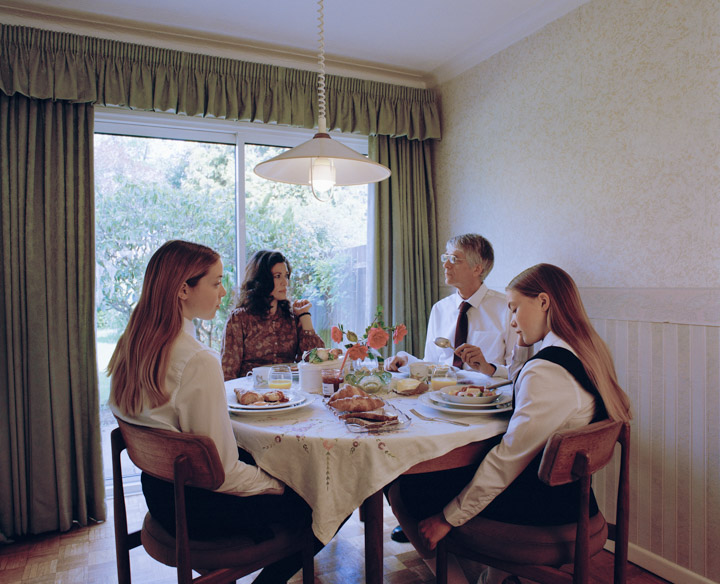
Top Image: GREAT BRITAIN / Reconstruction of the photographer’s family lunch time from the series Little Girl My String Bean My Lovely Woman. The project is focused on processing memories from the family past in order to deal with negative thoughts and behaviour in the present. 2021, Carina Kehlet Schou / London
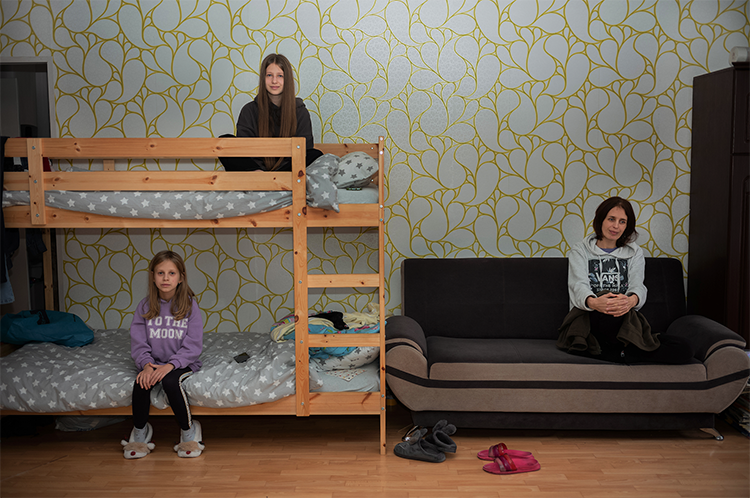
Bottom Image: POLAND / Ruslana fled with her two daughters from Lviv and is now living in Kożuchow, Poland. Her husband, who was fighting in the Ukrainian army, was captured by the Russian army and has not been heard from since. 2022, Agata Grzybowska / Warsaw
|
|
|
|
|
|
|
|
|
|
|
|
|
|
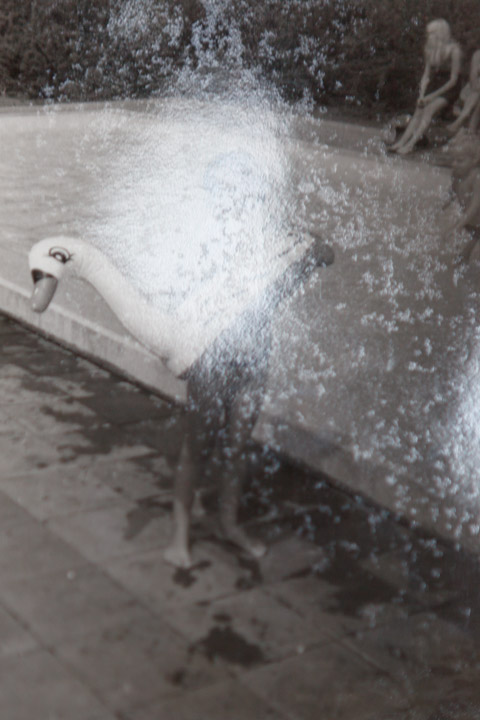
A reproduced photograph from the family archive from the series Changeling, in which the photographer investigates how the same people who lived together for decades could have completely different memories. 2019-ongoing, Pascale Hustings / Amsterdam
|
|
|
|
|
|
|
|
|
|
|
|
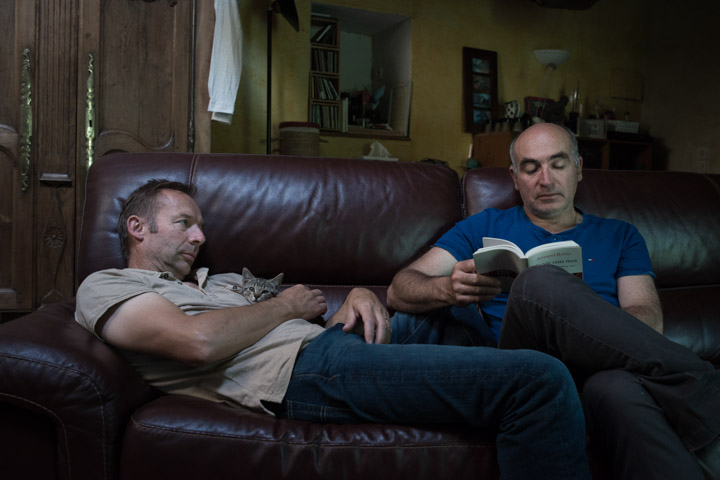
Portrait of the couple Fulub and Yann-Pier, both teachers, at their house in the countryside, where they have lived for the last 25 years. In his project Des Familles, Vincent reflects on the fundamental question “what is family?” through the meetings and friendships with different families across his region. 2015, Vincent Gouriou / Brest
|
|
|
|
|
|
|
|
|
|
|
|
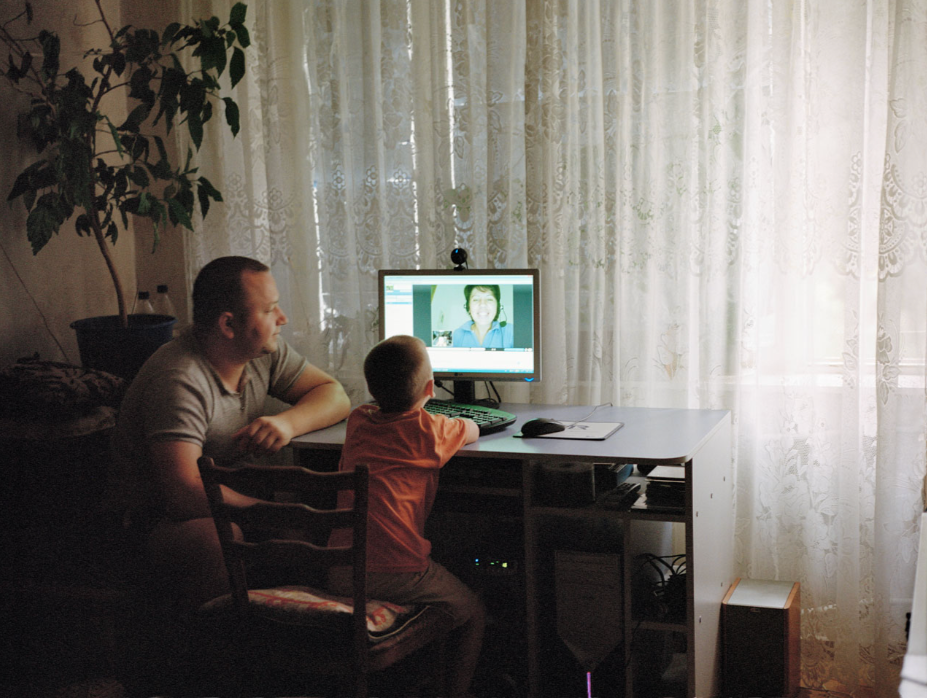
Father and son having a video call with the boy’s mother, who left to work abroad. In her series Country without Parents, Andrea Diefenbach portrays the living conditions of migrant workers from Moldova. 2008-2012, Andrea Diefenbach / Wiesbaden
|
|
|
|
|
|
|
|
|
|
|
|
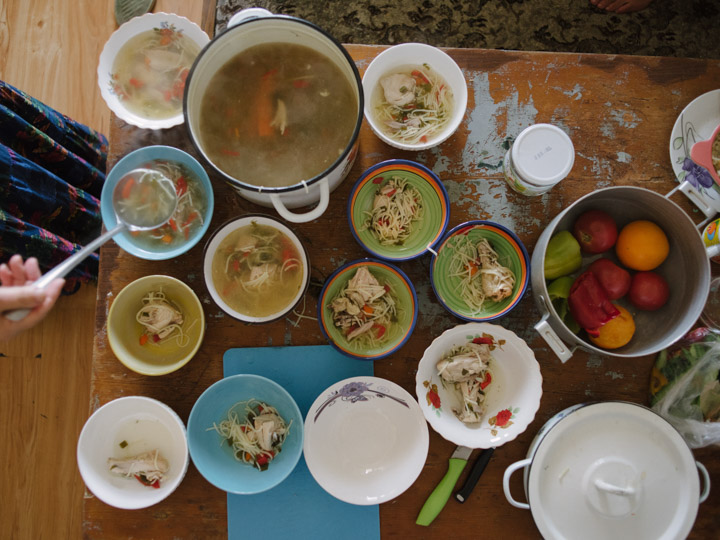
Dinner preparations for a big family gathering, from the series Sem’ya, in which the photographer explores and reflects on relationships among generations, the loss of a family member, transitioning time, the emigration of her nephews, and the apartment where she herself grew up. 2017, Katerina Shosheva / Chișinău
|
|
|
|
|
|
|
|
|
|
|
|
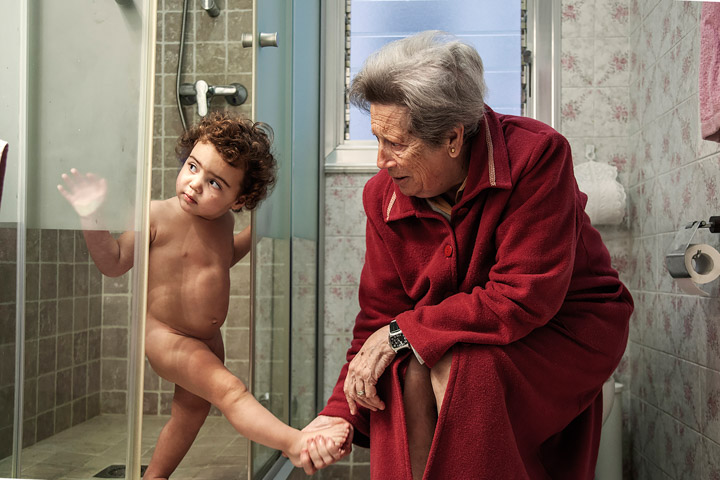
A little girl and her 76-year-old neighbour in the bathroom, from the series Maria, a Love Story, which shows the impact of the photographer's daughter's birth on her life and the life of her neighbour Maria. Severine Sajous contemplates the meaning of the classic idea of “Family” through being a young single parent. 2019-2020, Severine Sajous / Pau
|
|
|
|
|
|
|
|
|
|
|
|
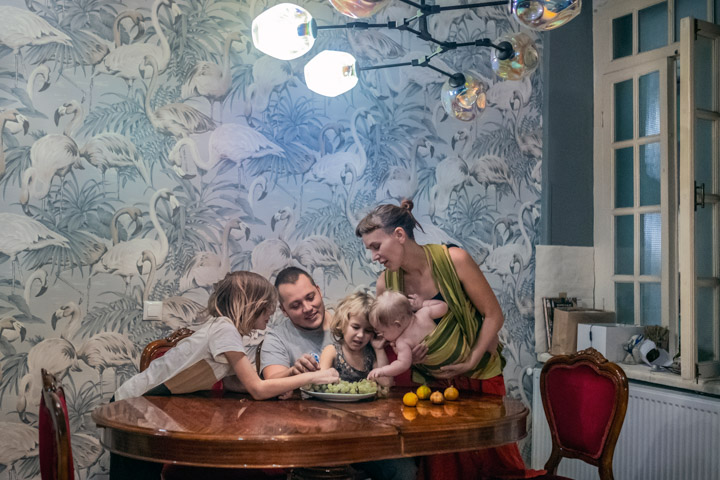
Dasha and Andrey, one Russian and the other Ukrainian, who both previously lived for several years in Moscow, pictured with their kids in their new home in Georgia, where they moved after the Russian invasion of Ukraine. In her project Familia Oksana Yushko reflects on the war not from a political angle but through family stories, reconstructing cross-border and family ties that have endured for centuries. 2014-2023, Oksana Yushko / Moscow
|
|
|
|
|
|
|
|
|
|
|
|
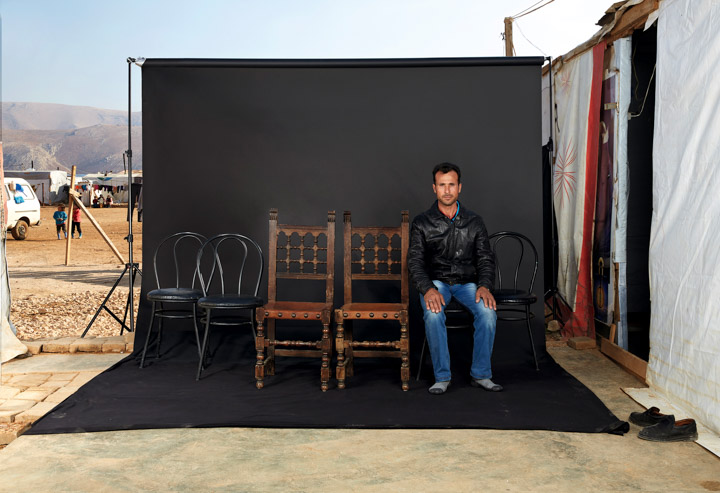
A portrait of Ali’s missing family in the Bekaa Valley refugee camp. His home in Syria was bombed and he escaped leaving behind his mother, father, brother and two sisters. 2017, Dario Mitidieri / London
|
|
|
|
|
|
|
|
|
|
|
|
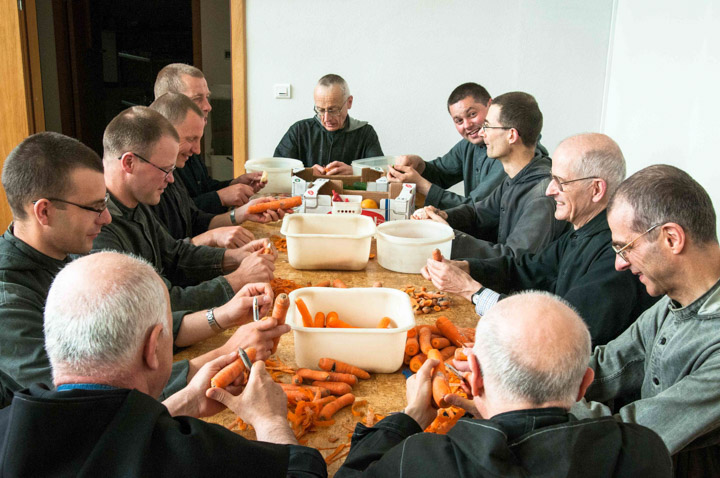
The series Ora et Labora follows the daily life and the expressions of individuality of a community of monks in the only Benedictine monastery in Lithuania. 2011-2012, Eugenijus Barzdzius / Vilnius
|
|
|
|
|
|
|
|
|
|
|
|
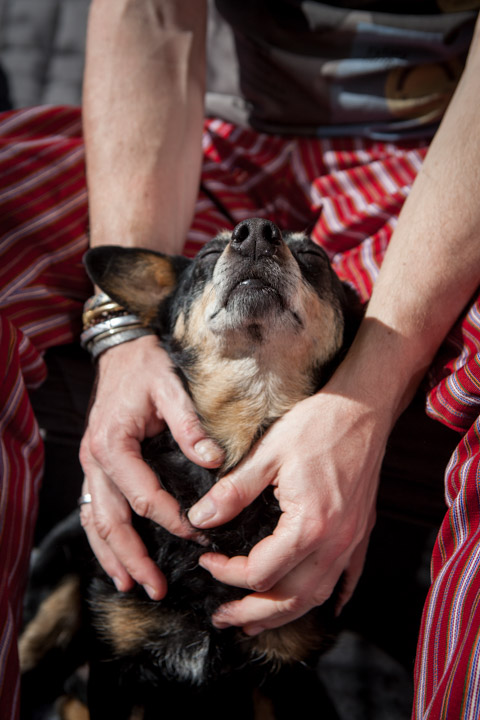
A dog named Kajtek a few weeks after being adopted. The project It’s Never Too Late for a Home reflects on the adoption of old dogs whose chances of being rehomed are much slimmer than of younger animals. 2021, Julia Zabrodzka / Warsaw
|
|
|
|
|
|
|
|
|
|
| |
This year’s first edition of European Images takes the form of a family album, one that we stumbled upon, hidden away in an attic or perhaps retrieved from a dusty bookcase, and that we are presenting to you as visual fragments. It is a collective scrapbook that preserves fleeting images of childhood and family events, a souvenir that helps us commemorate the good old days.
But much more than simply revealing the nostalgic undertones of seemingly universal family dynamics, this kind of almost archival intent uncovers a shift in our understanding of what family is today. We are often told that we cannot choose our family. Perhaps this is only partially true. These fundamentally Western constructions of family as genetic ties, as the building block of society, or as a pretext for exclusion, need to be challenged, opened up, and ultimately left behind.
|
|
|
|
| |
|
We are often told that we cannot choose our family. Perhaps this is only partially true.
|
|
|
|
| |
Nuances of equally real families include uprooted groups marked by the intergenerational trauma of parents forced to work abroad, where the distinction between ‘nature’ and ‘nurture’ becomes even more relevant, as well as communities that transcend artificially imposed boundaries of sex, gender, class, or ethnicity.
In a world that is already vulnerable to the dangers of isolation and conflict, we need to further expand this notion of family as a dynamic component of society. Family is not just blood, it is also close-knit communities; not just man and woman, also much more beyond and in-between binaries; not just love, but friendship as well; not tradition or biology, but kinship and solidarity.
|
|
| |
Laura and Petrica from KAJET / Bucharest
|
|
|
|
|
|
|
| |
|
|
|
|
|
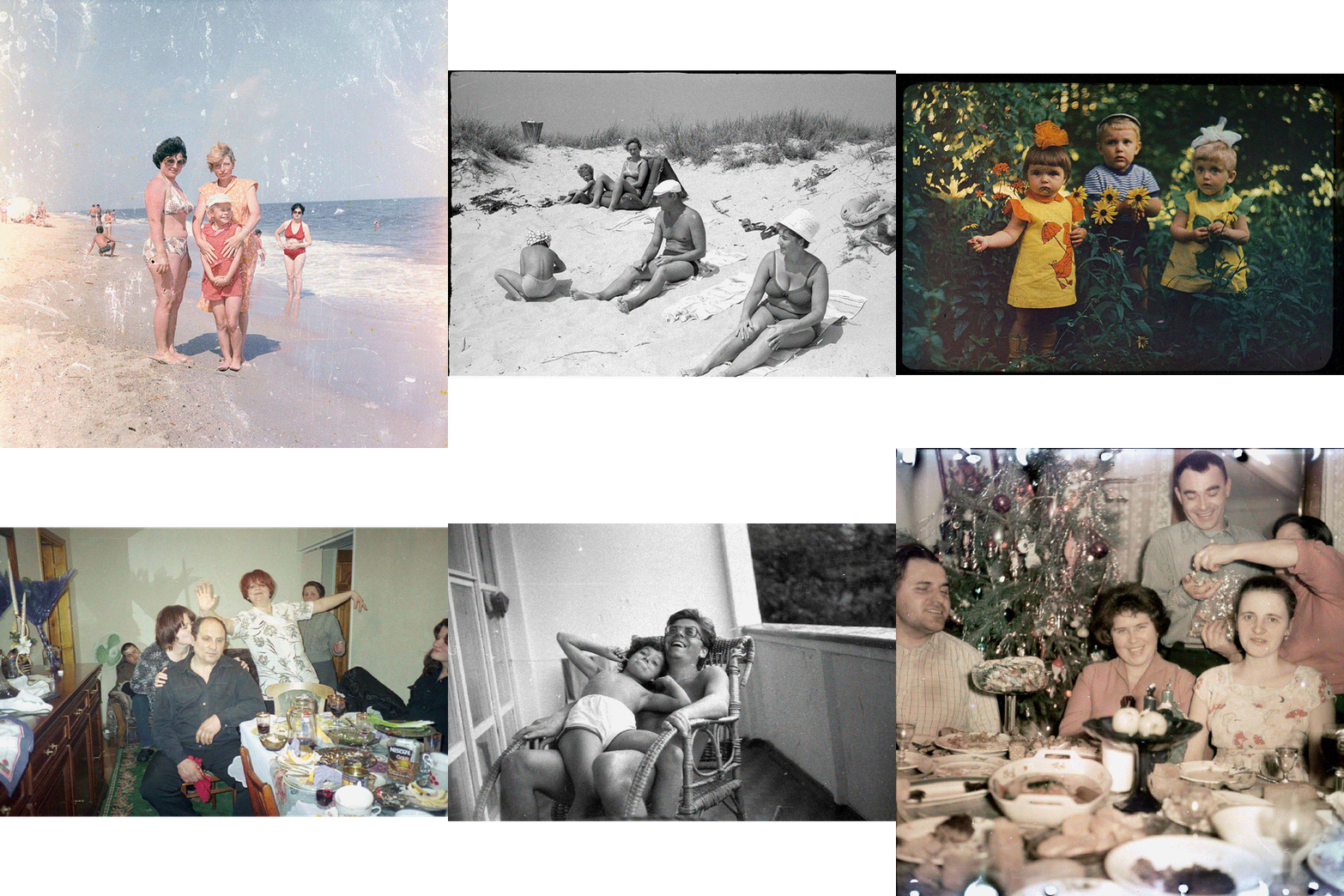
These excerpts from a personal vernacular archive started from a story about the abandoned house of my mother’s neighbour, who was a veteran of WWII. She recalled from her childhood that she and her peers found a lot of negatives and played with them, ending up burning them at sunset. That led me to constantly collecting random negatives I found on streets, in garbage bins, and at flea markets. Though I was looking for a document of the times, what I discovered were countless careless and cheerful moments of family gatherings and activities, priceless negatives that probably would never have been printed and thus could have been forgotten forever.
by Ramin Mazur / Chișinău
|
|
|
|
|
|
|
|
|
|
|
|
|
|
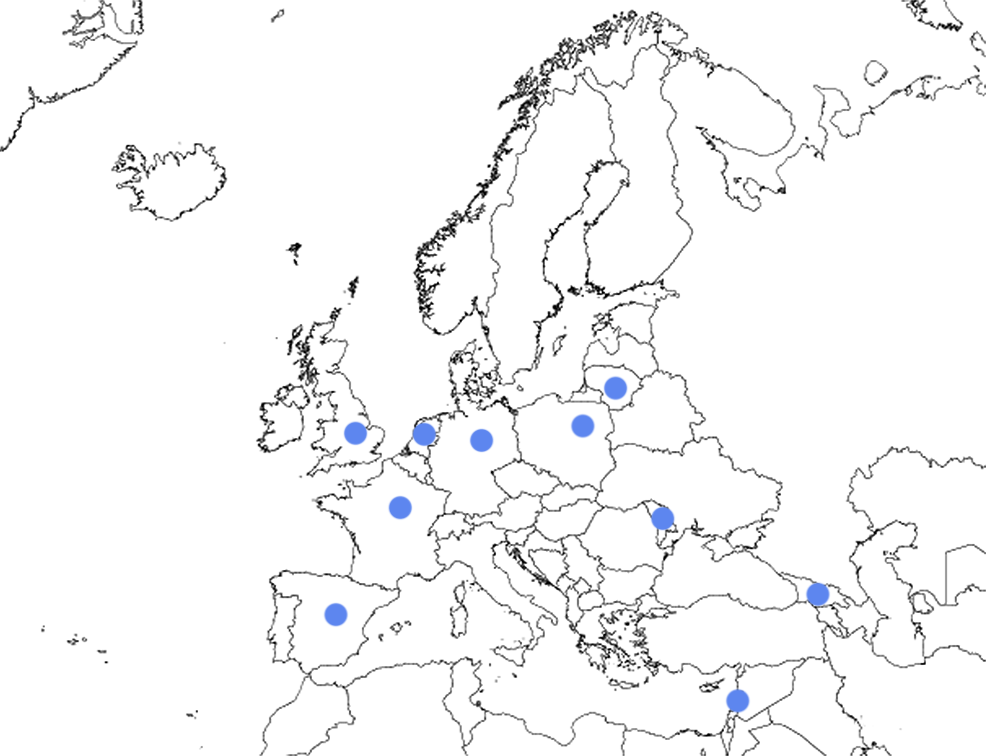
THE LOCATIONS OF THIS ISSUE
|
|
Photographers: Carina Kehlet Schou, Dario Mitidieri, Pascale Hustings, Vincent Gouriou, Andrea Diefenbach, Katerina Shosheva, Sverine Sajous, Oksana Yushko, Agata Grzybowska, Eugenijus Barzdzius, Julia Zabrodzka
Text authors: Petrică Mogoș and Laura Naum
Editorial team: Laura Naum and Petrică Mogoș (Kajet Journal), Karolina Mazurkiewicz, Magdalena Kicińska (Pismo Magazin), Stefan Günther (n-ost) and Ramin Mazur.
Design: Philipp Blombach, Ramin Mazur
Copy Editing: Ben Knight
|
|
|
|
|
|
|
|
If you like the publication, please follow us on the European Images Instagram account!
This is the first edition in 2023 of European Images, a project by n-ost, in partnership with Kajet Journal (RO) and Pismo (PL) supported by Allianz Kulturstiftung and the Foundation for Polish-German Cooperation.
Coordinated by n-ost, documentary photographers will meet weekly on Wednesday 6pm CEST throughout the entire period of the project.
|
|
|
|
|
|
|
|
|
|
|
|
|
|
initiated and coordinated
by n-ost
|
|
You've received this email because you are a member or a friend of
n-ost, Pismo, Kajet or Ramin or subscribed to European Images
|
|
|
|
| |
|
|
|
|
|
|